
1 view
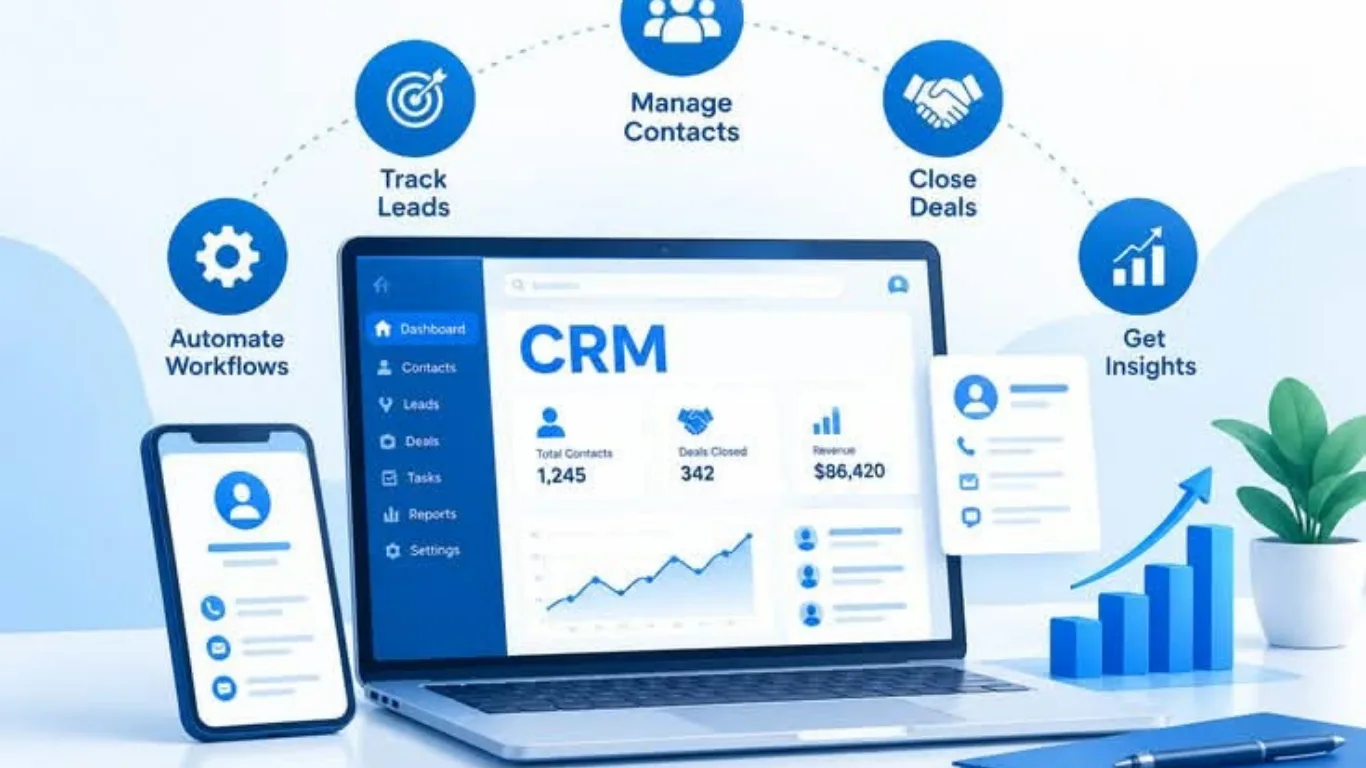
This is where Customer Relationship Management (CRM) data becomes valuable.
A CRM system stores information about customers and potential buyers, including their contact details, preferences, interactions, purchase history, enquiry sources, and sales progress. When businesses use this information effectively, they can understand their audience better and create marketing campaigns that are more relevant to customer needs.
Instead of sending the same message to everyone, marketers can use CRM insights to segment audiences, personalize communication, improve lead generation, and measure campaign performance.
In this guide, we will explore how to use CRM data to improve digital marketing campaigns, which information businesses should track, and how to turn customer insights into practical marketing decisions.
What Is CRM Data in Digital Marketing?
CRM data refers to the information businesses collect and organize about their customers and prospects through a Customer Relationship Management system.
This information helps marketing and sales teams understand how people interact with a brand throughout the customer journey.
For example, when someone fills out a website enquiry form, downloads an eBook, requests a product demonstration, or purchases a service, the details can be recorded in a CRM system.
Common types of CRM data include:
-
Contact information: Names, email addresses, phone numbers, and business details.
-
Demographic information: Age range, location, industry, and other relevant audience characteristics.
-
Purchase history: Products or services purchased and previous transactions.
-
Customer preferences: Interests, product requirements, and communication preferences.
-
Website activity: Pages visited, forms submitted, and other recorded interactions.
-
Campaign interactions: Email clicks, advertising responses, and lead sources.
-
Sales information: Lead status, sales conversations, deal value, and conversion history.
When connected with digital marketing platforms, CRM data can help businesses understand which campaigns attract attention, generate qualified leads, and contribute to actual sales.
Why CRM Data Matters for Digital Marketing Campaigns
Many businesses invest in SEO, Google Ads, social media marketing, email marketing, and content creation. However, running campaigns across multiple channels does not automatically produce better results.
The real challenge is understanding which audiences respond, what they need, and what encourages them to take action.
CRM data provides useful context that basic marketing analytics may not show on their own.
1. Understand Your Target Audience Better
A successful marketing campaign starts with a clear understanding of its audience.
CRM records can reveal common customer characteristics, interests, buying patterns, and service requirements. Marketers can use these insights to understand which audience groups are most relevant to the business.
For example, a website development company may discover that many of its customers are small businesses looking for affordable website redesign services. This information can guide its content topics, advertising messages, and landing page strategy.
Rather than creating broad campaigns for everyone, the business can focus on people who are more likely to need its services.
2. Improve Audience Segmentation
Not every customer has the same needs or buying intentions.
Someone who has just discovered a brand may need educational content, while someone who has requested a quotation may be ready for a sales conversation.
CRM data makes it easier to divide contacts into meaningful groups based on factors such as:
-
Previous purchases
-
Product or service interests
-
Location
-
Industry
-
Lead status
-
Website interactions
-
Customer lifecycle stage
-
Engagement with previous campaigns
These segments help marketers create more relevant campaigns instead of sending identical messages to the entire contact list.
3. Create More Relevant Marketing Messages
Customers are more likely to engage with content that addresses their actual needs.
CRM insights help businesses understand what customers are interested in and which problems they want to solve. Marketers can use this information to adjust email content, advertisements, offers, and website messaging.
For example, a customer interested in SEO services may respond better to a campaign about improving organic search visibility than to a general advertisement promoting every service offered by an agency.
Personalization should be useful rather than intrusive. Businesses should use relevant information to improve the customer experience without making communication feel uncomfortable.
10 Practical Ways to Use CRM Data to Improve Digital Marketing Campaigns
CRM data becomes valuable when businesses use it to make better marketing decisions. Here are ten practical ways to apply customer information across different digital channels.
1. Build Customer Segments Based on Real Data
Audience segmentation is one of the most useful applications of CRM data.
Instead of relying only on broad assumptions about customer interests, businesses can create segments using actual information collected through enquiries, purchases, and interactions.
For example, an online education company could divide its audience into:
-
Students interested in digital marketing courses
-
Working professionals looking to upgrade their skills
-
Business owners interested in marketing training
-
Previous students interested in advanced courses
Each group has different requirements, so the company can create separate campaigns for them.
A campaign for working professionals might highlight flexible learning schedules, while a campaign for business owners could focus on practical skills for managing marketing activities.
Practical tip: Start with three or four meaningful customer segments. Too many small segments can make campaigns difficult to manage.
2. Personalize Email Marketing Campaigns
Email marketing becomes more effective when messages reflect the recipient’s interests and stage in the buying journey.
CRM data can help marketers personalize:
-
Email subject lines
-
Product recommendations
-
Service information
-
Educational content
-
Follow-up messages
-
Special offers
-
Customer onboarding emails
For example, someone who downloads a guide about social media marketing may receive a follow-up email containing related resources, such as a social media planning checklist or a guide to measuring campaign performance.
A person who has already purchased a service should receive different communication from someone who has only subscribed to a newsletter.
CRM-based email marketing also makes it easier to build automated workflows.
Example email workflow:
-
A visitor downloads a free marketing guide.
-
Their contact information is recorded in the CRM.
-
They receive a confirmation email.
-
A follow-up email shares related educational content.
-
If they request a consultation, the sales team receives a notification.
This approach helps businesses maintain communication without manually sending every message.
3. Improve Google Ads Targeting
Google Ads campaigns can attract website visitors, but businesses also need to understand which leads eventually become customers.
CRM data can help connect advertising activity with lead quality and sales outcomes.
For example, a company may receive enquiries through three different Google Ads campaigns. One campaign generates many enquiries, but another produces fewer leads that are more likely to purchase.
Without CRM tracking, the company might continue investing heavily in the campaign with the highest enquiry volume.
By reviewing lead status and conversion information, marketers can make more informed decisions about:
-
Campaign budgets
-
Keyword selection
-
Audience targeting
-
Landing page messaging
-
Conversion tracking
-
Lead quality
Where platform integrations and appropriate consent settings allow, businesses may also use eligible CRM conversion information to improve advertising measurement and audience strategies.
For better results, combine CRM insights with professional Google Ads management rather than evaluating campaigns only by clicks and impressions.
4. Create Better Social Media Marketing Campaigns
Social media platforms provide engagement information, but CRM data adds another layer of understanding.
It helps businesses identify which social media activities are contributing to enquiries and customers.
For example, a company may publish educational posts, customer testimonials, short videos, and promotional content. CRM records can help identify which content themes are associated with incoming leads.
Marketers can use these insights to:
-
Identify audience interests
-
Develop relevant content themes
-
Create targeted lead-generation campaigns
-
Improve follow-up communication
-
Understand the quality of social media leads
Suppose a business receives several enquiries after sharing customer success stories. It may decide to publish more case studies and customer-focused content.
Social media performance should not be measured only by likes, shares, and followers. Businesses should also examine whether their social activities contribute to meaningful customer interactions.
Explore relevant social media marketing strategies to build campaigns that connect audience engagement with business goals.
5. Identify High-Quality Leads
Not every lead has the same potential to become a customer.
Some people are researching their options, while others have a clear requirement and are ready to make a purchase.
CRM data helps businesses distinguish between these groups.
Useful lead-quality indicators may include:
-
Service or product requirements
-
Budget information, when voluntarily provided
-
Previous interactions
-
Enquiry source
-
Purchase intent
-
Responses to follow-up communication
-
Sales team feedback
Businesses can use these details to develop a lead-scoring system.
For example, a company may assign higher scores to people who request a quotation, book a consultation, or repeatedly engage with relevant service information.
The marketing team can then prioritize campaigns that attract qualified prospects rather than focusing only on total lead volume.
6. Improve Customer Journey Mapping
Customers rarely make every purchase immediately after discovering a business.
They may first see a social media post, visit the website, read a blog, compare service providers, and eventually submit an enquiry.
CRM data helps marketers understand these interactions and identify where customers move forward or lose interest.
A simple customer journey may look like this:
Awareness
Customer discovers the brand through SEO, social media, or advertising.
Interest
Customer visits the website and explores products or services.
Consideration
Customer compares options, reads content, or requests more information.
Conversion
Customer purchases a product or confirms a service.
Retention
Business continues communication and builds a long-term relationship.
By examining CRM records at each stage, businesses can identify where leads stop engaging.
For instance, if many people request information but very few schedule consultations, the business may need better follow-up emails, clearer service information, or a simpler booking process.
This information can guide improvements across the entire customer journey.
7. Create Effective Retargeting Campaigns
Some website visitors show interest but leave without completing an enquiry or purchase.
Retargeting allows businesses to reconnect with eligible audiences who have previously interacted with their website or marketing channels.
CRM information can help marketers understand what these people were interested in and develop more relevant follow-up campaigns.
For example:
-
Visitors interested in a particular service can receive related educational content.
-
Existing customers can receive relevant upgrade information.
-
Previous leads can receive updated service information.
-
People who requested a consultation can receive appropriate reminders.
CRM-based audience activation depends on available platform integrations, matching requirements, and applicable consent settings. Businesses should use customer data responsibly and avoid sending irrelevant or excessive advertisements.
8. Improve Content Marketing with Customer Insights
Content marketing works best when it answers questions customers actually ask.
CRM records can reveal recurring concerns, product comparisons, service requirements, and objections that appear during sales conversations.
These insights can become useful content ideas.
For example, if a digital marketing agency frequently receives questions about local SEO pricing, it could publish a detailed blog explaining local SEO services, important factors affecting costs, and how businesses can evaluate providers.
CRM data can help identify topics for:
-
Blog articles
-
Frequently asked questions
-
Case studies
-
Service pages
-
Email newsletters
-
Downloadable guides
-
Educational videos
This approach connects content marketing with real customer needs.
It can also support a stronger internal linking strategy. A blog about SEO challenges, for example, can naturally direct readers to the business’s relevant SEO service page.
9. Improve Customer Retention and Repeat Purchases
Digital marketing should not stop once a customer makes a purchase.
Existing customers may need support, additional services, upgrades, or complementary products. CRM data helps businesses understand these opportunities.
For example, a customer who purchased website development services may later need SEO, website maintenance, or digital advertising.
A business can use purchase history and previous conversations to send relevant information at suitable times.
Retention campaigns may include:
-
Customer onboarding emails
-
Service reminders
-
Product updates
-
Educational newsletters
-
Relevant upgrade suggestions
-
Feedback requests
-
Loyalty communication
The goal is to maintain a useful relationship rather than repeatedly sending promotional messages.
10. Measure Campaign Performance More Accurately
Website analytics can show traffic and engagement, but CRM data can help businesses understand what happens after someone becomes a lead.
This is particularly important when the sales cycle is longer.
For example, a B2B company may receive enquiries through SEO, Google Ads, and LinkedIn. Some leads may take weeks or months to become paying customers.
By connecting CRM records with campaign sources, the business can evaluate which channels contribute to actual sales.
Useful metrics include:
-
Lead-to-customer conversion rate
-
Qualified lead rate
-
Cost per qualified lead
-
Customer acquisition cost
-
Revenue by campaign
-
Sales pipeline value
-
Repeat purchase rate
-
Customer lifetime value
These measurements provide a more complete picture than impressions, clicks, or website traffic alone.
Which CRM Data Should Businesses Track?
Collecting every possible customer detail is not necessary. Businesses should focus on information that supports marketing decisions and customer communication.
| CRM data | How marketers can use it |
|---|---|
| Lead source | Identify which channels generate enquiries |
| Customer interests | Personalize content and offers |
| Purchase history | Recommend relevant products or services |
| Lead status | Create suitable follow-up campaigns |
| Customer location | Develop relevant regional campaigns |
| Email engagement | Improve email content and timing |
| Sales value | Evaluate campaign revenue |
| Customer feedback | Identify service and content improvements |
The exact data required will depend on the business model, sales process, and marketing objectives.
How to Integrate CRM Data with Digital Marketing Channels
CRM data becomes more useful when it is connected with the tools businesses already use.
A well-planned integration can reduce manual work and provide a clearer view of campaign performance.
1. CRM and Email Marketing Platforms
Connecting a CRM with an email marketing platform helps businesses organize contacts, create segments, and automate relevant communication.
For example, new leads can enter an educational email sequence, while existing customers receive updates based on their previous purchases.
2. CRM and Google Ads
Connecting eligible CRM conversion information with advertising platforms can help businesses understand which campaigns generate valuable outcomes.
It can also support more informed campaign optimization when the required tracking, integrations, and consent conditions are in place.
3. CRM and Website Analytics
Website analytics tools help businesses understand visitor behaviour, while CRM systems provide information about leads and customers.
Combining these insights can help marketers evaluate the relationship between website activity, enquiry generation, and sales outcomes.
4. CRM and Social Media Platforms
Social media integrations can help businesses organize incoming leads and manage follow-up activities.
For example, leads generated through social media forms may be transferred into the CRM so the sales team can respond and record their progress.
5. CRM and Marketing Automation
Marketing automation can use CRM information to trigger communication based on customer actions.
Examples include:
-
Sending welcome emails after registration.
-
Sharing relevant resources after a content download.
-
Notifying sales teams when high-intent leads submit enquiries.
-
Sending renewal reminders to existing customers.
Automation should support timely communication without making interactions feel repetitive or impersonal.
Common Mistakes to Avoid When Using CRM Data
CRM data can improve marketing decisions, but poor data management can create problems.
Here are some common mistakes businesses should avoid.
1. Collecting Data Without a Clear Purpose
Businesses sometimes collect large amounts of information without knowing how they will use it.
This creates unnecessary complexity.
Start by identifying the marketing decisions you want to improve. Then collect only the information needed to support those decisions.
2. Ignoring Data Quality
Incorrect email addresses, duplicate contacts, outdated details, and incomplete records can affect campaign performance.
Regularly review and clean CRM records to maintain reliable information.
3. Sending the Same Message to Every Customer
A new lead, an existing customer, and a repeat buyer may have completely different requirements.
Avoid treating every contact as part of the same audience. Use meaningful segmentation to improve campaign relevance.
4. Focusing Only on Lead Quantity
A campaign that generates hundreds of enquiries is not necessarily better than one that generates fewer but more qualified leads.
Track lead quality, sales progress, and revenue alongside enquiry volume.
5. Ignoring Privacy and Data Protection
Customer information should be collected and used responsibly.
Businesses should explain how information is used, respect communication preferences, apply appropriate access controls, and follow relevant privacy and data protection requirements.
Avoid using customer information for unrelated marketing activities without an appropriate basis.
6. Failing to Align Marketing and Sales Teams
Marketing teams may focus on generating leads, while sales teams focus on converting them.
If both teams use different definitions of a qualified lead, campaign evaluation becomes difficult.
Establish shared lead stages, reporting processes, and feedback systems so everyone understands what makes a lead valuable.
A Simple CRM-Based Digital Marketing Strategy
Businesses do not need a complicated system to start using CRM data effectively. A structured process can help teams turn customer information into practical marketing improvements.
| Step | Action | Expected benefit |
|---|---|---|
| 1 | Review existing CRM records | Understand available customer information |
| 2 | Identify important customer segments | Create more relevant campaigns |
| 3 | Connect marketing channels | Improve campaign tracking |
| 4 | Personalize communication | Deliver useful messages |
| 5 | Automate suitable follow-ups | Maintain consistent engagement |
| 6 | Track qualified leads and sales | Understand business outcomes |
| 7 | Review and improve campaigns | Make better marketing decisions |
Businesses should review campaign performance regularly rather than making decisions based on a single day’s results.
A monthly review can help identify changing customer interests, under performing campaigns, and opportunities to improve marketing communication.
How ASINFOVISION Can Help Businesses Improve Digital Marketing
Using CRM data effectively requires more than storing customer details. Businesses need a clear strategy that connects audience insights with their website, content, advertising, social media, and lead-generation activities.
ASINFOVISION helps businesses build and manage digital marketing strategies focused on improving online visibility, attracting relevant audiences, and generating meaningful enquiries.
Depending on business requirements, this can include:
-
SEO services: Improve organic visibility and attract people searching for relevant products or services.
-
Google Ads management: Develop paid campaigns with clear targeting and measurable objectives.
-
Social media marketing: Build brand awareness and engage relevant audiences.
-
Website designing and development: Create user-friendly websites that support enquiries and conversions.
-
Lead generation: Improve the process of attracting, capturing, and managing potential customers.
A connected marketing strategy helps businesses use customer insights more effectively across different channels. CRM data can guide these activities, while campaign analytics and sales feedback help measure their contribution to business growth.
Frequently Asked Questions (FAQs)
1. How does CRM data improve digital marketing campaigns?
CRM data helps businesses understand customer interests, preferences, purchase history, and interactions. Marketers can use these insights to segment audiences, personalize campaigns, improve lead quality, and measure which channels contribute to sales.
2. What type of CRM data is most useful for marketing?
Useful CRM information includes lead sources, customer interests, purchase history, contact details, lead status, campaign interactions, and sales outcomes. Businesses should prioritize data that helps them understand their audience and improve marketing decisions.
3. Can CRM data improve email marketing?
Yes. CRM data helps marketers divide contacts into relevant groups and send emails based on customer interests, previous interactions, and buying stages. It can also support automated follow-ups, customer onboarding, and retention campaigns.
4. How can CRM data improve lead generation?
CRM data helps businesses identify which channels generate qualified leads and which customer segments are more likely to convert. Marketers can use this information to improve audience targeting, landing pages, campaign messaging, and follow-up processes.
5. Is CRM data useful for small businesses?
Yes. Small businesses can use CRM data to organize enquiries, understand customer preferences, manage follow-ups, and identify effective marketing channels. Even a simple CRM system can provide useful insights when records are maintained consistently.
6. How often should businesses review CRM data?
Businesses should maintain CRM records regularly and review campaign-related information at consistent intervals. Monthly performance reviews are a practical starting point, although companies with high lead volumes or active campaigns may benefit from more frequent monitoring.
Conclusion
CRM data can help businesses move beyond basic digital marketing metrics and understand what customers actually need. By analyzing customer preferences, lead sources, purchase history, and campaign interactions, marketers can create more relevant campaigns and make better decisions.
From email personalization and audience segmentation to Google Ads optimization, social media marketing, and customer retention, CRM insights can support almost every stage of the customer journey.
However, collecting information alone is not enough. Businesses must maintain accurate records, connect their marketing tools, respect customer preferences, and measure outcomes that matter to revenue.
The most effective approach is to combine CRM insights with a clear digital marketing strategy. When SEO, paid advertising, social media, website performance, and lead generation work together, businesses can create a more consistent customer experience.