
2 views
A customer may discover your business through Google, social media, or an online advertisement, but what they find about your brand often influences whether they choose to buy from you. A few positive reviews can encourage someone to make an enquiry, while unanswered complaints or misleading information can make them look elsewhere.
This is why reputation management in digital marketing has become an important part of building a successful business. Customers want more than attractive advertisements and convincing sales messages. They want evidence that a business is reliable, listens to its customers, and delivers on its promises.
Online reputation management helps businesses monitor their digital presence, respond to customer feedback, address complaints, and build a consistent image across online platforms. It also supports other marketing activities, including search engine optimization (SEO), social media marketing, and lead generation.
For startups, small businesses, and established companies, a strong online reputation can make it easier to earn customer confidence and develop long-term relationships.
In this guide, we will explore what reputation management means in digital marketing, why it matters, and how businesses can build customer trust through practical, sustainable strategies.
What Is Reputation Management in Digital Marketing?
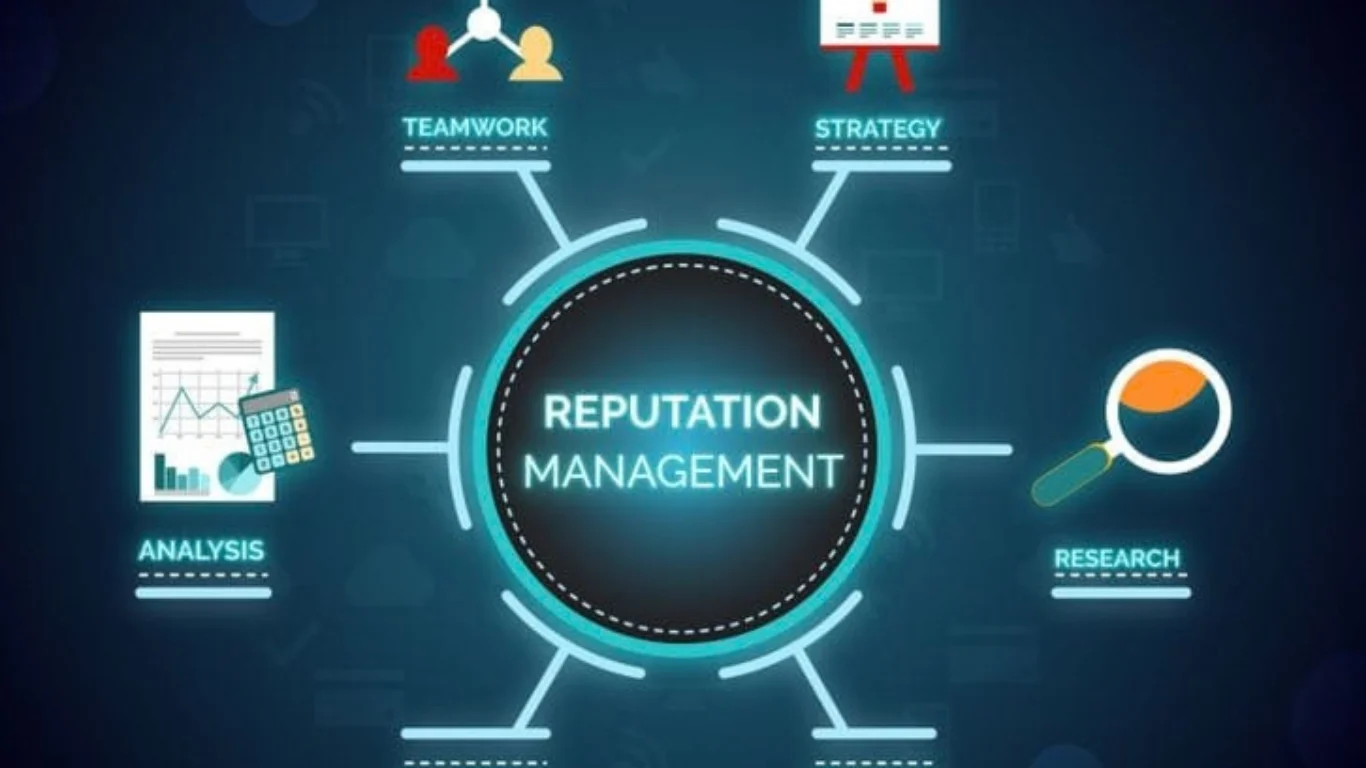
Reputation management in digital marketing is the process of monitoring, influencing, and improving how people perceive a business online. It involves managing customer reviews, responding to feedback, maintaining accurate business information, monitoring brand mentions, and sharing content that demonstrates credibility.
The goal is not to make every customer say something positive. Instead, it is to build an honest, reliable online presence and respond professionally when problems arise.
For example, imagine a customer comparing two local service providers. Both offer similar prices, but one has detailed customer reviews, helpful responses to complaints, and an informative website. The other has outdated information and several unanswered negative reviews.
The first business may appear more trustworthy because it gives customers more reasons to feel confident about their decision.
Reputation management brings together several digital marketing activities, including:
- Review management: Monitoring and responding to customer reviews.
- Social media monitoring: Tracking comments, messages, and brand mentions.
- Search reputation management: Understanding what appears when people search for your business.
- Customer feedback management: Identifying recurring complaints and opportunities for improvement.
- Content marketing: Publishing useful information that demonstrates expertise.
- Brand consistency: Keeping business details, messaging, and customer communication consistent across platforms.
These activities work together to strengthen customer confidence and support long-term business growth.
Why Is Online Reputation Important for Businesses?
Customers often research a company before making a purchase, booking a service, or contacting its sales team. Your digital reputation helps them decide whether your business deserves their attention.
Here are some of the main reasons online reputation matters.
1. It Builds Customer Trust
Trust is difficult to establish through advertising alone. Customers want to see evidence that other people have had positive experiences with your business.
Reviews, testimonials, detailed service information, and professional responses to customer questions can help provide that reassurance.
For instance, a potential client considering a digital marketing agency may look for examples of previous work, clear communication, and genuine client feedback before scheduling a consultation.
Businesses that provide transparent information make it easier for customers to evaluate their services.
2. It Influences Purchasing Decisions
When customers compare similar products or services, reputation can become a deciding factor.
A business with consistent feedback and a professional online presence may stand out from competitors offering similar prices. However, reviews are only one part of the decision. Customers may also consider product quality, convenience, pricing, customer support, and their own requirements.
The practical lesson is simple: make it easy for potential customers to understand what you offer and what they can reasonably expect.
3. It Supports SEO and Local Visibility
Online reputation and search engine optimization are closely connected, particularly for businesses that depend on local customers.
Accurate business details, a well-maintained Google Business Profile, and genuine customer reviews can help people evaluate a business in local search results. Review quality, quantity, and recency can also contribute to how customers perceive a business.
Reviews alone do not guarantee higher rankings. Search visibility depends on several factors, including relevance, distance for local searches, prominence, website quality, and other search signals.
Businesses looking to strengthen their organic presence can explore professional SEO services alongside their reputation management efforts.
4. It Helps Generate Qualified Leads
A positive reputation can reduce uncertainty during the customer journey.
Someone who has already read helpful reviews, found clear service information, and received a prompt response to an enquiry may feel more comfortable taking the next step.
This can support lead generation by encouraging relevant prospects to call, submit a form, request a quotation, or book a consultation.
However, reputation alone does not guarantee conversions. Businesses also need clear offers, useful landing pages, effective follow-up, and a service that meets customer expectations.
5. It Strengthens Customer Loyalty
Reputation management is not limited to attracting new customers. It also helps businesses maintain relationships with existing ones.
When customers feel heard and see that their feedback leads to meaningful improvements, they have more reasons to continue the relationship.
A thoughtful response to a problem can sometimes restore confidence more effectively than a promotional campaign because it demonstrates accountability.
7 Effective Reputation Management Strategies to Build Customer Trust
Building a strong reputation requires consistent effort. These strategies can help businesses manage their online presence while creating better customer experiences.
1. Monitor Your Online Reputation Regularly
You cannot manage your reputation effectively if you do not know what customers are saying.
Start by identifying the platforms where people are most likely to discuss your business. These may include Google Business Profile, Facebook, Instagram, LinkedIn, industry directories, review websites, and relevant online communities.
Search your brand name regularly to understand what customers and potential buyers see.
Pay attention to:
- New positive and negative reviews.
- Questions about your products or services.
- Complaints about delivery, pricing, or customer support.
- Incorrect business information.
- Public mentions of your brand.
- Recurring concerns that may indicate an operational problem.
For smaller businesses, a simple spreadsheet can be enough to track reviews, response dates, recurring issues, and actions taken. Larger businesses may benefit from dedicated monitoring tools.
The important thing is to establish a regular process instead of checking your reputation only when a problem occurs.
2. Encourage Genuine Customer Reviews
Customer reviews help prospective buyers understand what it is like to work with your business.
Rather than waiting for customers to leave feedback on their own, create a straightforward process for requesting reviews after a purchase or completed service.
For example, a business could send a polite follow-up email thanking a customer and inviting them to share an honest review.
To encourage participation:
- Ask customers for feedback at an appropriate time.
- Provide a direct link to the relevant review platform.
- Explain that honest feedback is welcome.
- Make the process simple and convenient.
- Avoid repeatedly contacting customers who have declined.
Never buy fake reviews, create misleading testimonials, or pressure customers into leaving positive feedback. Avoid incentives that violate the review platform’s policies.
A mix of genuine positive, neutral, and negative feedback is more credible than an online profile that appears artificially perfect.
Most importantly, use reviews to identify what customers value and where your business needs to improve.
3. Respond to Negative Reviews Professionally
Negative reviews can feel personal, particularly when a business owner has invested considerable effort in serving customers. However, responding defensively can make a difficult situation worse.
A professional response demonstrates that your business takes feedback seriously.
Use the following approach:
Acknowledge the concern. Thank the customer for sharing their experience and recognise the issue they have raised.
Apologise where appropriate. If your business made a mistake, take responsibility rather than making excuses.
Offer a practical next step. Explain how the customer can contact your team to discuss the matter further.
Follow through. Investigate the issue and take reasonable steps to resolve it.
For example:
“Thank you for sharing your feedback. We are sorry that your experience did not meet expectations. We would appreciate the opportunity to understand what happened and address your concerns. Please contact our support team so we can look into this further.”
Keep your response calm, concise, and respectful. Avoid sharing private customer information or arguing publicly about every detail.
Not every negative review will be resolved to the customer’s satisfaction. Still, a thoughtful response can reassure other potential customers that your business is willing to listen and act responsibly.
4. Maintain a Consistent Brand Presence Across Channels
Customers may encounter your business on several platforms before making a decision. Inconsistent information can create confusion and weaken confidence.
For example, your website may list one phone number while your business profile displays another. Your social media page may promote a service that is no longer available, or your opening hours may be outdated.
Review your key digital touchpoints to ensure they communicate accurate information.
Check the following details:
- Business name, address, and contact information.
- Opening hours and service availability.
- Product descriptions, pricing, and policies.
- Brand messaging and visual identity.
- Website service pages and enquiry forms.
- Social media profile details and pinned posts.
Consistency does not mean publishing identical content everywhere. It means ensuring that the essential facts about your business remain accurate.
A professional website also provides a central place where customers can learn about your services, review your policies, and contact your team. Businesses can improve this experience through thoughtful website design and development.
5. Use Social Media to Build Relationships
Social media is more than a place to publish promotional content. It gives businesses an opportunity to communicate directly with customers and demonstrate their values through everyday interactions.
Customers may use social platforms to ask questions, share experiences, report problems, or seek recommendations. How your business responds can influence how others perceive your brand.
Build trust by sharing useful content, answering questions, acknowledging customer feedback, and communicating clearly about your products or services.
You can also publish:
- Customer success stories with appropriate permission.
- Product demonstrations and service explanations.
- Behind-the-scenes content.
- Frequently asked questions.
- Educational posts that address common customer concerns.
- Updates about improvements made in response to feedback.
Avoid treating every interaction as a sales opportunity. Sometimes, a helpful answer is more valuable than a promotional message.
A consistent social media marketing strategy can help businesses maintain meaningful engagement while strengthening brand recognition.
6. Publish Helpful Content That Demonstrates Expertise
Customers are more likely to trust a business when its content answers real questions and helps them make informed decisions.
Content marketing can support reputation management by showing what your business knows, how it works, and how it approaches customer problems.
For example, a healthcare provider might publish general educational information about its services, while a software company could create troubleshooting guides or product tutorials.
Useful content can include:
- Detailed service pages.
- Educational blog articles.
- Step-by-step guides.
- Case studies with verifiable outcomes.
- Expert commentary.
- Video tutorials.
- Answers to common customer questions.
Avoid publishing exaggerated claims or presenting unsupported statements as facts. If you share customer results, explain the context and do not suggest that every customer will achieve the same outcome.
Content should reflect genuine expertise and be reviewed for accuracy before publication.
Businesses can also connect educational content with their broader SEO strategy so customers can discover helpful information through relevant searches.
7. Turn Customer Feedback Into Real Improvements
Responding to feedback is valuable, but addressing the underlying problem is what makes reputation management sustainable.
If multiple customers complain about delayed responses, your team may need a clearer support process. If customers regularly misunderstand your pricing, your website may need more transparent service descriptions.
Look for patterns rather than treating every complaint as an isolated incident.
A practical process involves four steps:
- Collect feedback: Gather reviews, support requests, survey responses, and direct comments.
- Identify patterns: Look for recurring issues and common customer expectations.
- Take action: Assign responsibility for resolving the most important problems.
- Review progress: Check whether complaints decrease and customer experiences improve.
When appropriate, tell customers what has changed because of their feedback.
For example, a business might explain that it has introduced clearer delivery updates after customers reported uncertainty about order status.
This demonstrates that feedback is not simply being collected for appearance. It is helping the business improve.
How to Manage Negative Feedback Without Damaging Your Brand
Negative feedback is a normal part of doing business. The objective is not to eliminate every criticism but to respond appropriately and distinguish genuine complaints from inaccurate or abusive content.
Start by evaluating the situation before replying.
| Type of feedback | Recommended response |
|---|---|
| Genuine service complaint | Acknowledge the issue and offer a reasonable solution. |
| Misunderstanding about pricing or policies | Explain the relevant information clearly and respectfully. |
| Incorrect factual claim | Correct the information calmly using verifiable details. |
| Spam or abusive content | Report it through the platform if it violates its policies. |
| Repeated complaint about the same issue | Investigate the underlying process and consider a broader improvement. |
Do not automatically dismiss negative reviews because they affect your rating. A legitimate complaint can reveal an issue that needs attention.
Likewise, avoid promising refunds, replacements, or other remedies publicly before confirming the circumstances and your business policies.
If a review appears fraudulent or violates a platform’s rules, use the appropriate reporting process. A platform may investigate the report, but removal is not guaranteed simply because the review is negative.
The best reputation management approach combines public professionalism with meaningful action behind the scenes.
The Role of SEO in Online Reputation Management
SEO helps customers discover your business when they search for relevant products, services, and information. Reputation management helps them evaluate what they find.
These activities can support one another.
For example, a customer searching for a service provider may discover your website through an organic result, review your service pages, check customer feedback, and then contact your business.
If the information is accurate and the customer experience appears credible, the customer has more reasons to consider your offer.
Businesses can strengthen this relationship by:
- Creating clear, useful service pages.
- Maintaining accurate business information.
- Publishing original, expert-led content.
- Using relevant internal links to connect related resources.
- Monitoring branded search results.
- Providing accessible contact details and clear policies.
- Making website navigation and enquiry processes straightforward.
Technical SEO and structured data can help search engines understand relevant information about a business, although structured data does not guarantee particular search features or rankings.
It is also worth monitoring branded searches to understand what prospective customers encounter when researching your company.
The goal is not simply to push negative content out of view. It is to make accurate, useful, and trustworthy information about your business easy to find.
How to Measure Reputation Management Performance
A reputation management strategy should have measurable objectives. Tracking a few relevant indicators helps businesses understand whether their efforts are improving customer experiences and supporting business growth.
Consider monitoring these metrics:
Review rating and volume: Track average ratings and the number of new reviews over time. Consider review recency and the platforms where reviews appear.
Review response rate: Measure how consistently your team responds to relevant reviews and how long responses take.
Customer sentiment: Look for recurring positive themes and complaints in reviews, surveys, and support conversations.
Brand mentions: Monitor discussions about your business across relevant websites and social platforms.
Branded search activity: Review how often people search for your business name and how they interact with relevant search results.
Website enquiries and conversions: Track calls, form submissions, bookings, and other meaningful actions that may be influenced by customer trust.
Customer retention: Where appropriate, monitor repeat purchases, renewals, and customer satisfaction over time.
These metrics should be interpreted together. An increase in positive reviews, for example, does not automatically prove that revenue will increase.
Compare results over consistent periods and investigate changes before drawing conclusions. Businesses should also respect customer privacy when collecting and analysing feedback.
Common Reputation Management Mistakes to Avoid
Even businesses that actively manage their online presence can make mistakes that reduce customer confidence.
Avoid these common problems:
- Ignoring negative reviews: Silence can leave customers feeling that their concerns are unimportant.
- Arguing with customers: Defensive replies can make a small issue appear much bigger.
- Buying fake reviews: Artificial feedback can undermine credibility and violate platform policies.
- Making promises you cannot keep: Overstated claims can create expectations your business cannot meet.
- Using generic responses everywhere: Customers may feel that their concerns are not being taken seriously.
- Hiding legitimate criticism: Removing or suppressing honest feedback prevents businesses from learning from customer experiences.
- Neglecting older content: Outdated prices, policies, and service information can create confusion.
- Measuring reputation only through star ratings: Ratings do not reveal every issue affecting customer satisfaction or purchasing decisions.
A strong reputation is built through honest communication, consistent service quality, and a willingness to improve.
A Simple 30-Day Reputation Management Action Plan
If your business does not have a formal reputation management process, start with a manageable plan.
Week 1: Audit Your Digital Presence
Search for your business name and review your website, business profiles, review platforms, and social media pages.
Record inaccurate details, unanswered reviews, and recurring customer concerns.
Week 2: Improve Review Management
Create a process for requesting genuine customer reviews. Respond to outstanding feedback and assign responsibility for monitoring new reviews.
Prepare response guidelines to help your team communicate consistently without sounding robotic.
Week 3: Strengthen Customer-Facing Content
Update service pages, contact information, frequently asked questions, and customer support details.
Publish helpful content that answers common questions and clearly explains what customers can expect.
Week 4: Review Results and Set Priorities
Measure your starting position against your current results. Identify the most common complaints, assess response times, and select two or three improvements for the next month.
Continue monitoring performance and adjust your approach as customer needs change.
This process creates a practical foundation without requiring a large budget or complicated technology.
Frequently Asked Questions
1. What is reputation management in digital marketing?
Reputation management in digital marketing involves monitoring and improving how customers perceive a business online. It includes managing reviews, responding to feedback, maintaining accurate business information, monitoring brand mentions, and publishing credible content. The aim is to build customer trust, address concerns, and maintain a consistent digital presence across relevant platforms.
2. Why is online reputation management important for businesses?
Online reputation management helps customers evaluate a business before making purchasing decisions. Genuine reviews, transparent information, and professional responses can reduce uncertainty and strengthen confidence. It can also support local discovery, customer retention, and lead generation. However, results depend on the quality of the customer experience and other factors affecting purchasing decisions.
3. How can a business improve its online reputation?
Start by monitoring customer reviews and brand mentions regularly. Encourage genuine feedback, respond professionally to complaints, correct inaccurate business information, and publish useful content. Most importantly, identify recurring problems and make practical improvements. A consistent process is more sustainable than trying to improve ratings through short-term promotional campaigns.
4. How should businesses respond to negative reviews?
Businesses should acknowledge the customer’s concern, apologise when appropriate, and offer a reasonable next step. Responses should remain calm and respectful, even when criticism seems unfair. Avoid sharing private information or arguing publicly. If a review violates a platform’s policies, report it through the appropriate channel rather than attempting to manipulate the review process.
5. Does online reputation management help SEO?
Online reputation management can support SEO by helping businesses maintain accurate information, develop credible brand signals, and provide useful content for customers. Reviews can also influence customer decisions in local search results. However, reputation management does not guarantee higher rankings. SEO performance depends on multiple factors, including relevance, website quality, technical accessibility, and the searcher’s needs.
6. How often should a business monitor its online reputation?
Businesses should monitor important review platforms and customer communication channels regularly. A small business might review its online feedback several times a week, while a company receiving frequent customer interactions may need daily monitoring. The right schedule depends on review volume, customer expectations, and the potential impact of unresolved complaints.
Conclusion
Reputation management in digital marketing is about more than maintaining positive reviews. It is about creating an online presence that gives customers genuine reasons to trust your business.
By monitoring feedback, responding professionally to complaints, maintaining accurate information, publishing helpful content, and improving the customer experience, businesses can develop a stronger and more consistent reputation.
These efforts also complement SEO, social media marketing, and lead generation. When customers find useful information and see evidence of responsible business practices, they have more confidence in taking the next step.
There is no shortcut to lasting trust. Fake reviews, defensive responses, and exaggerated promises may create short-term appearances, but they cannot replace reliable service and honest communication.
Businesses should treat reputation management as an ongoing responsibility rather than a one-time campaign. Regular monitoring, clear processes, and measurable improvements help keep the strategy practical and sustainable.
For businesses looking to strengthen their digital presence, ASINFOVISION offers services across SEO, social media marketing, and other digital marketing activities that can complement a broader reputation-building strategy.
Ultimately, customer trust grows when your online promises match the experience your business delivers.