


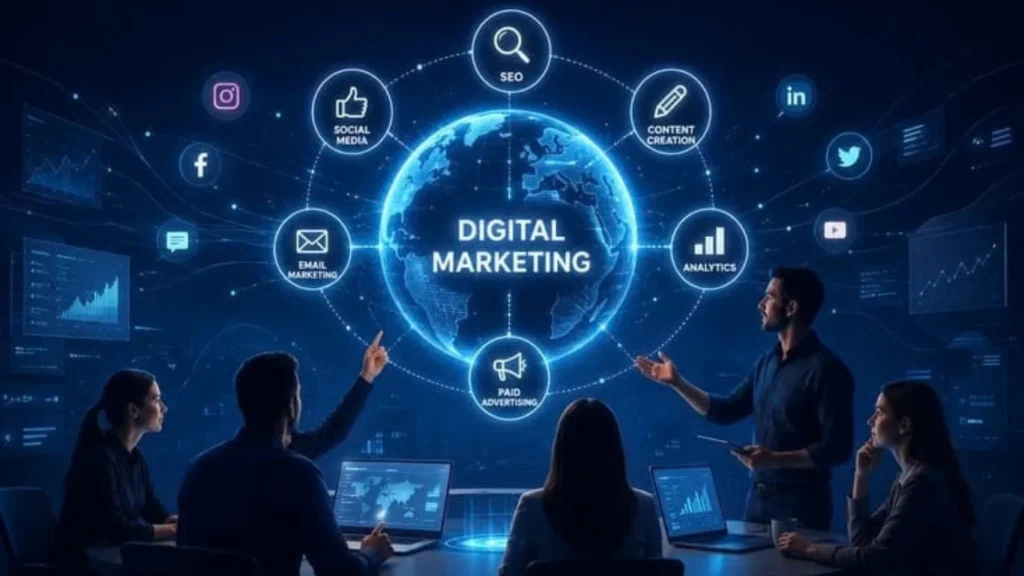
Digital marketing is becoming more dependent on the quality of customer information businesses can collect and understand. As customer journeys become more complex and marketing channels continue to expand, having access to reliable customer data is becoming increasingly valuable.
One area that deserves more attention in 2027 is first-party data.
First-party data is information a business collects directly from its customers and website visitors. It can come from website interactions, enquiry forms, purchases, email subscriptions, CRM records, customer feedback, and other direct interactions.
Unlike relying heavily on broad audience assumptions, first-party data gives businesses a clearer picture of the people they are actually trying to reach. It can help marketers understand customer preferences, identify different audience groups, improve personalization, and make better decisions across marketing channels.
For businesses planning their digital marketing strategy for 2027, building a stronger first-party data strategy should be part of the conversation.
What Is First-Party Data?
First-party data is information collected directly by a business from its own audience or customers.
For example, a company may collect information when someone:
- Visits its website
- Fills out a contact form
- Subscribes to an email newsletter
- Downloads a resource
- Requests a quote
- Makes a purchase
- Creates an account
- Interacts with customer support
- Responds to an email campaign
- Provides feedback
The important point is that the business has a direct relationship with the source of the data.
Examples of First-Party Data
A B2B company, for example, may collect:
- Name and business email
- Company information
- Service interests
- Website behaviour
- Previous enquiries
- Content downloads
- Sales interactions
- Customer status
An ecommerce business might collect:
- Products viewed
- Purchase history
- Cart activity
- Product preferences
- Email engagement
- Customer feedback
When this information is organised properly, it can become a useful resource for marketing, sales, customer service, and business decision-making.
Why First-Party Data Matters More in 2027
Marketing is moving toward more personalised and data-informed customer experiences. Generic messages may not perform as well when customers expect brands to understand their needs and interests.
The 2027 digital marketing landscape described in the content brief places greater importance on personalization and first-party data, including CRM information, customer segmentation, email marketing, personalised offers, and customer journey analysis.
Here are some of the main reasons businesses should pay attention to first-party data.
1. First-Party Data Gives You a Direct View of Your Customers
One of the biggest advantages of first-party data is that it comes from your own interactions with customers.
Instead of making decisions based only on general audience research, marketers can look at what their actual audience is doing.
For example, a service business may notice that visitors who read several service pages are more likely to submit an enquiry. That information can influence website content, internal linking, landing pages, and follow-up campaigns.
What Businesses Can Learn From Customer Data
First-party data can help answer questions such as:
- Which services attract the most interest?
- Which pages generate enquiries?
- What content do customers engage with?
- Which email topics receive more responses?
- Where are potential customers leaving the buying journey?
- Which customer groups respond to specific offers?
These insights can make marketing decisions more practical and less dependent on assumptions.
2. It Makes Marketing Personalization More Relevant
Personalization is not simply adding a customer’s name to an email.
Useful personalization means delivering information, offers, or content that is relevant to where a customer is in their journey.
For example, someone who has repeatedly viewed a particular service page may be interested in a detailed guide, case study, or consultation related to that service.
Customer Segmentation Improves Personalization
First-party data can be used to divide audiences into meaningful groups.
A business could segment customers based on:
- New visitors
- Existing leads
- Returning customers
- High-value customers
- Product interests
- Service interests
- Previous purchases
- Engagement level
Each group can then receive more relevant communication.
This approach is more useful than sending exactly the same message to everyone.
3. It Helps Businesses Understand the Customer Journey
Customers rarely move directly from discovering a business to making a purchase.
A typical journey may include:
Search → Website visit → Content interaction → Enquiry → Follow-up → Purchase
First-party data can help businesses understand what happens at each stage.
For example, a company might discover that many leads visit a blog article before viewing a service page. That insight could encourage the business to improve internal links between relevant blog content and service pages.
A strong SEO strategy can support this process by connecting useful content with relevant service and conversion pages.
4. It Strengthens CRM and Email Marketing
Customer Relationship Management (CRM) systems can become much more valuable when they contain useful and organised customer information.
Instead of treating every contact as the same, marketers can use customer data to create more relevant email campaigns.
Examples of Data-Driven Email Marketing
A business could send:
- Welcome emails to new subscribers
- Educational content to new leads
- Service information based on customer interests
- Follow-ups after an enquiry
- Product recommendations based on previous activity
- Offers for existing customers
- Re-engagement emails for inactive contacts
The goal is not to send more emails. It is to make each communication more useful.
5. First-Party Data Can Improve Lead Generation
Lead generation becomes more effective when businesses understand which audiences, channels, and content produce meaningful enquiries.
For example, website analytics may show that visitors from organic search spend more time on specific service pages, while another campaign generates many visits but very few enquiries.
That difference matters.
Traffic alone does not tell the whole story. Businesses should also consider lead quality, conversion rates, customer acquisition cost, and the actions visitors take after arriving on the website.
Connect Data With Your Lead Generation Strategy
Businesses can use first-party information to identify:
- High-intent visitors
- Strong-performing landing pages
- Popular services
- Common customer questions
- High-quality lead sources
- Content that contributes to conversions
This can help shape a stronger lead generation strategy rather than simply focusing on increasing website traffic.
6. It Supports Better AI-Powered Marketing
AI is becoming increasingly useful across digital marketing, including content creation, segmentation, personalization, automation, predictive analysis, advertising, and campaign optimization. However, AI still depends on the quality of the information available to it.
First-party data can provide businesses with more relevant information about their own audience.
Human Expertise Still Matters
AI can help identify patterns and automate repetitive tasks, but businesses still need people to interpret those insights.
For example, an AI system may identify that a particular customer segment interacts more frequently with a certain type of content. A marketer can then decide whether that behaviour represents a genuine opportunity and what type of campaign should follow.
The strongest approach combines data, technology, and human judgement.
7. It Helps Businesses Create More Relevant Content
Content marketing is also becoming more focused on expertise, trust, and usefulness.
First-party data can help businesses understand what their audience actually wants to know.
Suppose a digital marketing company receives repeated questions about SEO, paid advertising, or website conversions. Those questions can inform future articles, guides, FAQs, videos, and other content.
Use Customer Questions as Content Ideas
Businesses can review:
- Sales conversations
- Customer support questions
- Search behaviour
- Website searches
- Email responses
- Frequently asked questions
- Enquiry forms
These sources can reveal topics that are genuinely relevant to customers.
This supports a more useful content strategy and can contribute to topical authority over time.
8. It Can Make Paid Marketing More Measurable
Paid advertising works best when businesses can connect campaigns with meaningful business outcomes.
First-party data can help marketers understand what happens after someone interacts with an advertisement.
For example:
Ad → Landing page → Form submission → Sales follow-up → Customer
Looking only at clicks provides limited information. Tracking the full journey gives businesses a better understanding of campaign performance.
Businesses can then compare metrics such as:
- Cost per lead
- Conversion rate
- Customer acquisition cost
- Return on ad spend
- Lead quality
A well-integrated Google Ads management strategy can work alongside website analytics, CRM data, SEO, and conversion tracking to provide a clearer picture of performance.
9. Your Website Becomes an Important First-Party Data Hub
Your website is one of the most important places where customers interact directly with your business.
Every meaningful interaction can provide useful insight when tracking and measurement are set up appropriately.
A strong business website should make it easy for visitors to:
- Understand your services
- Find useful information
- Contact your business
- Request a quote
- Download resources
- Subscribe to updates
- Complete a purchase
Website design also matters because a confusing user experience can make it difficult for visitors to complete important actions.
A conversion-focused website design and development approach can help businesses create clearer journeys while supporting their broader marketing strategy.
10. First-Party Data Supports SEO and AI Search Visibility
SEO is no longer only about achieving higher rankings for individual keywords.
The broader focus includes search intent, helpful content, topical authority, technical SEO, internal linking, user experience, structured data, and brand authority.
First-party data can indirectly support these areas by showing businesses what their audiences actually care about.
For example, customer questions and website behaviour can reveal content gaps. Those insights can then influence:
- New blog topics
- Service page improvements
- FAQs
- Internal links
- Conversion-focused content
- Content updates
This creates a useful connection between customer insights and content strategy.
How to Build a First-Party Data Strategy for 2027
Collecting data is only the first step. Businesses also need a practical system for turning information into useful marketing decisions.
1. Identify Your Most Valuable Data Sources
Start by listing where customer information already exists.
This could include:
- Website analytics
- CRM
- Contact forms
- Email platform
- Sales records
- Customer support
- Ecommerce systems
- Surveys
- Social media interactions
You may already have more useful information than you realise.
2. Organize Customer Information
Data becomes difficult to use when it is scattered across different systems.
Create clear customer segments and define which information is useful for marketing and sales decisions.
Avoid collecting information simply because it is available. Focus on data that can help you understand customer needs and improve their experience.
3. Connect Marketing Channels
First-party data becomes more valuable when marketing channels work together.
For example:
SEO + Website + Email + Social Media + Paid Ads + CRM
The 2027 brief recommends a more integrated digital marketing approach rather than treating each channel as a separate activity.
4. Focus on Customer Experience
The purpose of collecting customer data should not be to create more complicated marketing.
Use it to make the customer journey clearer and more relevant.
If customers repeatedly ask the same question, create better content. If a service page receives strong interest but few enquiries, improve its messaging or conversion path.
Let customer behaviour guide improvements.
Common First-Party Data Mistakes to Avoid
A first-party data strategy can become ineffective if businesses focus only on collecting more information.
Collecting Too Much Data
More data does not automatically mean better marketing.
Focus on information that has a clear business purpose.
Keeping Data in Separate Systems
If customer information is spread across disconnected platforms, it becomes harder to understand the full customer journey.
Where practical, connect your marketing, sales, analytics, and CRM processes.
Ignoring Data Quality
Incorrect, outdated, or duplicate customer information can lead to poor decisions.
Regularly review your databases and remove unnecessary or inaccurate information.
Focusing Only on Traffic
Website traffic is useful, but it is not the final business outcome.
Look at what visitors do after arriving. Do they engage with content, submit enquiries, book calls, request quotes, or become customers?
Key Takeaways for Businesses in 2027
| Area | How First-Party Data Helps |
|---|---|
| Customer understanding | Shows real customer interests and behaviour |
| Personalization | Supports more relevant experiences |
| CRM | Helps organize and segment contacts |
| Email marketing | Enables more targeted communication |
| Lead generation | Helps identify valuable leads and channels |
| Content marketing | Reveals useful topics and customer questions |
| Paid advertising | Improves campaign measurement |
| Website | Helps identify user behaviour and conversion opportunities |
| AI marketing | Provides useful business-specific information |
| SEO | Supports content and customer-intent insights |
Frequently Asked Questions
What is first-party data in digital marketing?
First-party data is information a business collects directly from its own customers and audience. Examples include website interactions, CRM records, email subscriptions, enquiry forms, purchases, customer feedback, and other direct interactions.
Why is first-party data important in 2027?
First-party data can help businesses understand their customers more clearly, improve personalization, segment audiences, strengthen CRM and email marketing, and make better marketing decisions based on their own customer interactions.
How can first-party data improve personalization?
Businesses can use customer interests, previous interactions, service preferences, and engagement behaviour to create more relevant content, emails, offers, and customer journeys instead of sending the same message to every audience group.
Can first-party data help with lead generation?
Yes. It can help businesses understand which pages, campaigns, content, and channels contribute to enquiries. This makes it easier to focus marketing resources on activities that attract relevant and higher-quality leads.
How does first-party data work with AI marketing?
First-party data can provide AI-powered marketing systems with useful information about a business’s own audience. AI can help identify patterns, support segmentation, automate tasks, and optimize campaigns, while human marketers remain responsible for strategy and judgement.
How should businesses start using first-party data?
Start by identifying existing data sources such as your website, CRM, email platform, sales records, and customer interactions. Organize useful information into meaningful segments and use the insights to improve customer experience, content, personalization, and marketing performance.
Conclusion
First-party data is becoming an increasingly valuable part of digital marketing because it helps businesses understand their own customers rather than relying only on broad audience assumptions.
In 2027, businesses should think beyond simply collecting information. The real value comes from using customer insights to improve personalization, content, email marketing, lead generation, website experiences, paid campaigns, and customer journeys.
A strong strategy also requires integration. SEO, website development, social media, paid advertising, CRM, analytics, and content should work together rather than operate as isolated channels.
For businesses looking to build a more connected digital marketing strategy, ASINFOVISION can use these principles to help create a practical approach focused on visibility, customer experience, qualified leads, and measurable results.
The goal is simple: collect useful customer insights, understand what they mean, and use them to make marketing more relevant and effective.