


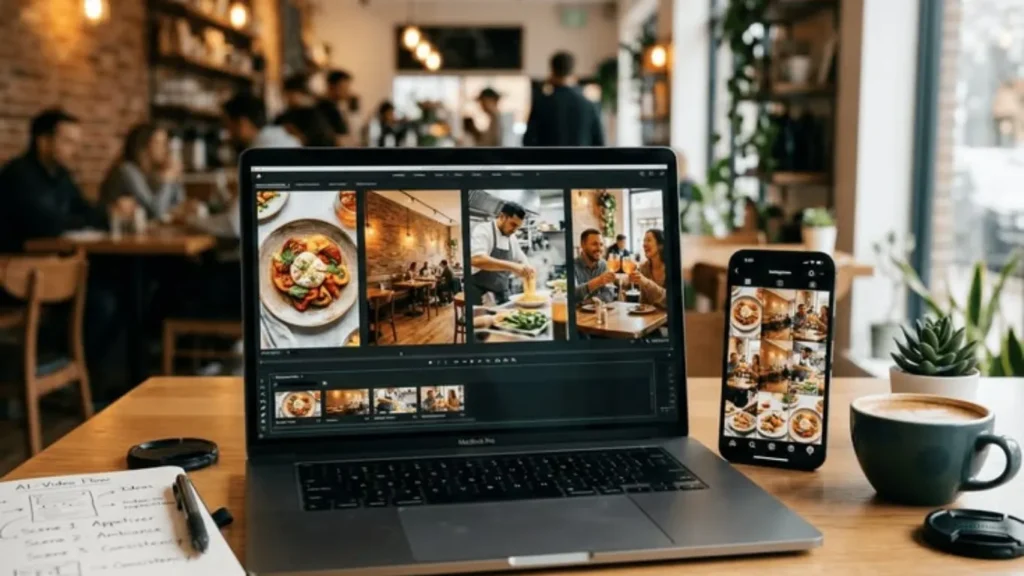
A restaurant can serve excellent food, offer great service, and create a welcoming atmosphere, but attracting a steady flow of customers requires more than a good menu. People now discover restaurants through Google searches, social media, online reviews, food delivery platforms, and recommendations from friends. If your restaurant is not visible where potential customers are looking, you may miss valuable opportunities.
Digital marketing for restaurants in 2027 is about connecting with customers at the right moment and giving them a reason to choose your business. Whether someone is searching for a family restaurant nearby, looking for a place for a special dinner, or deciding where to order food, your online presence can influence their decision.
Restaurants need a practical marketing strategy that combines local SEO, social media, engaging content, online reputation management, paid advertising, and customer retention. These channels should work together rather than operate as separate activities.
This guide explains how restaurants can use digital marketing to increase local visibility, attract new visitors, encourage repeat orders, and build stronger customer relationships in 2027.
Why Digital Marketing Matters for Restaurants in 2027
Restaurant customers often research their options before making a decision. They may check the menu, compare prices, read reviews, view food photographs, or look at the restaurant’s location and opening hours.
A strong digital presence helps restaurants provide this information and build confidence before customers visit.
Digital marketing can help restaurants:
- Reach people searching for food and dining options nearby.
- Promote new menus, seasonal dishes, and special offers.
- Increase reservations and online orders.
- Build trust through customer reviews.
- Encourage repeat visits and recommendations.
- Understand which campaigns bring actual customers.
The goal should not be to collect followers or likes alone. Restaurants should focus on meaningful outcomes such as table bookings, calls, direction requests, takeaway orders, and returning customers.
1. Strengthen Your Local SEO Strategy
Local SEO is one of the most valuable digital marketing strategies for restaurants because customers frequently search for dining options based on location.
Searches such as “restaurants near me,” “best family restaurant in Dehradun,” or “Italian food nearby” show that someone may be ready to visit or place an order.
Your restaurant should have accurate, helpful information available when these searches happen.
Optimize Your Google Business Profile
A complete Google Business Profile helps customers discover important restaurant information through Google Search and Maps.
Make sure your profile includes:
- Correct restaurant name and address.
- Updated phone number and website.
- Accurate opening and closing hours.
- Menu information where supported.
- High-quality food and restaurant photographs.
- Relevant business categories.
- Reservation or ordering links, where available.
Keep your profile updated whenever your timings, menu, or contact details change.
For example, if your restaurant introduces a new weekend brunch menu, update the relevant information and share a post with attractive photographs.
Use Location-Based Keywords
Your website should include keywords that reflect the restaurant’s location, cuisine, and services.
Examples include:
- Best vegetarian restaurant in Dehradun.
- Family restaurant in Jaipur.
- Italian restaurant in Delhi.
- Rooftop dining in Chandigarh.
- Affordable birthday party restaurant in Lucknow.
Use these phrases naturally in page titles, headings, menu descriptions, and location pages.
Avoid repeating the same keyword unnecessarily. Your content should sound natural and help customers understand what makes your restaurant worth visiting.
Build Location-Specific Website Pages
If your restaurant operates in multiple locations, create separate pages for each branch.
Each page should provide useful details such as its address, contact information, opening hours, photographs, available services, and directions.
This makes it easier for customers to find the correct location and helps search engines understand the relationship between your restaurant and each area.
Businesses looking to improve local search visibility can explore professional SEO servicse to strengthen their website and local search presence.
2. Use Social Media to Showcase Your Food and Experience
Food is naturally visual, which makes platforms such as Instagram, Facebook, and YouTube useful for restaurant marketing.
People enjoy seeing attractive dishes, behind-the-scenes preparation, restaurant interiors, and real customer experiences. Social media gives restaurants an opportunity to show what makes their dining experience different.
However, posting random food photographs is not a complete strategy. Every post should serve a purpose, whether that is building awareness, generating engagement, promoting an offer, or encouraging a visit.
Create Engaging Instagram Reels and Short Videos
Short-form videos can help restaurants introduce their food and atmosphere to new audiences.
Useful video ideas include:
- A chef preparing a signature dish.
- A close-up of a popular dessert.
- A short kitchen preparation video.
- A tour of the restaurant interior.
- A customer-favourite menu item.
- A behind-the-scenes look at food preparation.
- A quick introduction to a new menu.
Keep videos clear and visually appealing. Show the dish early, use readable captions, and include relevant location details.
For example, a restaurant launching a new pizza menu could create a short video showing the preparation, baking process, and final presentation.
Share Customer Experiences
Customer-generated content can make your restaurant feel more relatable.
Encourage satisfied visitors to share their dining experiences and tag your restaurant. You can also repost suitable customer photographs or videos with permission.
Real experiences can help potential customers understand what they might expect when visiting.
Maintain a Consistent Posting Schedule
A consistent social media presence helps customers stay familiar with your restaurant.
You can create a simple weekly schedule:
| Day | Content Idea |
|---|---|
| Monday | Popular dish of the week |
| Tuesday | Behind-the-scenes kitchen video |
| Wednesday | Customer review or experience |
| Thursday | Chef recommendation |
| Friday | Weekend dining promotion |
| Saturday | Restaurant atmosphere |
| Sunday | Family dining or special menu |
The schedule should be flexible. Focus on content quality and customer relevance rather than posting simply to fill the calendar.
Restaurants that need professional support with content planning and online engagement can explore social media marketing services.
3. Invest in High-Quality Food Photography and Videos
Customers cannot taste your food through a screen. They rely on photographs and videos to imagine the experience before ordering or visiting.
This makes food photography an important part of restaurant digital marketing.
Poor lighting, unclear photographs, and inconsistent images can make even excellent dishes look less appealing.
What Should Restaurants Photograph?
Build a collection of high-quality images covering different parts of your business:
- Signature dishes.
- Popular starters and desserts.
- Drinks and beverages.
- Restaurant interiors.
- Outdoor seating.
- Private dining areas.
- Chef and kitchen activities.
- Special events and celebrations.
Use natural lighting where possible and present food attractively without making images misleading.
Use Visual Content Across Marketing Channels
The same photographs and videos can support several marketing activities.
For example, a photograph of a new dessert can be used in:
- Instagram and Facebook posts.
- Website menu pages.
- Google Business Profile updates.
- Email promotions.
- Digital advertising campaigns.
Make sure images are appropriately sized and compressed for websites so they do not unnecessarily slow down page loading.
Professional graphic designing services can also help restaurants maintain consistent promotional designs across digital platforms.
4. Build a Restaurant Website That Converts Visitors
Social media and search platforms can introduce people to your restaurant, but your website gives you greater control over how customers access information and take action.
A restaurant website should be simple, attractive, mobile-friendly, and easy to navigate.
When someone visits your website, they should quickly find the menu, location, opening hours, contact details, and reservation options.
Include Essential Website Features
A useful restaurant website should have:
Clear menu pages: Display food categories, dish names, descriptions, and prices where appropriate. Keep the menu updated.
Reservation options: Make it easy for customers to request or book a table.
Online ordering: If your restaurant accepts direct orders, provide a clear ordering option.
Contact information: Display your phone number, address, opening hours, and directions.
Food photography: Use genuine, high-quality images that represent your dishes.
Mobile-friendly design: Make sure the website works smoothly on smartphones and tablets.
Clear calls to action: Use helpful prompts such as “Book a Table,” “View Menu,” and “Order Online.”
A complicated website can discourage visitors from taking the next step. Keep the customer journey straightforward.
If your existing website is outdated or difficult to use, consider professional website designing and development to improve its performance and customer experience.
5. Use Google Ads to Reach Customers Ready to Visit
SEO helps restaurants build organic visibility over time, while paid advertising can provide additional exposure for specific campaigns and customer searches.
Google Ads can be useful when people are actively looking for restaurants, cuisines, or dining options in a particular area.
For example, a restaurant may target relevant searches related to its cuisine and location.
Choose Relevant Keywords
Your campaign should focus on searches that match your actual offering.
Examples include:
- North Indian restaurant near me.
- Best cafe in Dehradun.
- Family dining restaurant in Jaipur.
- Best Chinese food in Chandigarh.
- Rooftop restaurant in Delhi.
Use location targeting to focus on areas your restaurant can realistically serve.
Create Focused Landing Pages
Do not send every advertisement to your website homepage if a more relevant page is available.
If an advertisement promotes a weekend buffet, direct visitors to a page explaining the buffet, its timings, menu, price, and reservation process.
This makes it easier for customers to find the information they need.
Measure Actual Results
Track meaningful actions such as:
- Phone calls.
- Table reservations.
- Online orders.
- Menu views.
- Direction requests.
- Website enquiries.
Monitor campaign spending and the quality of customers generated.
Restaurants can explore Google Ads management services to plan and optimize campaigns around business goals.
6. Work With Local Food Influencers and Creators
Food creators and local influencers can help restaurants reach audiences who are interested in dining experiences.
However, choosing an influencer based only on follower count can lead to poor campaign results.
A creator with a smaller but locally relevant audience may be more useful than someone with a large audience spread across unrelated locations.
How to Choose the Right Creator
Before working with an influencer, review:
- Audience location.
- Content quality.
- Engagement and genuine interaction.
- Previous restaurant collaborations.
- Audience interests.
- Communication style.
- Relevance to your restaurant’s cuisine and pricing.
Discuss the campaign expectations before starting.
For example, a restaurant may invite a local food creator to experience a new menu and share an honest review. Another campaign may focus on a special dining event or seasonal promotion.
Be transparent about paid partnerships and follow applicable platform disclosure requirements.
Focus on Authentic Experiences
Influencer content should help people understand the actual restaurant experience.
A useful collaboration can show the food, ambience, service, menu variety, and location.
Avoid relying entirely on scripted promotional messages. Genuine experiences are often more informative for potential customers.
7. Manage Online Reviews and Restaurant Reputation
Online reviews can influence whether someone chooses your restaurant or continues searching for alternatives.
Customers often check ratings and read recent feedback before making a reservation or placing an order.
A restaurant’s online reputation should therefore be managed consistently.
Encourage Genuine Customer Reviews
After a positive dining experience, politely invite customers to share feedback.
You can use:
- QR codes on tables.
- Follow-up messages after reservations.
- Thank-you emails.
- Printed review invitations on bills.
Never pressure customers to leave positive reviews or offer rewards in exchange for favourable ratings.
Respond to Positive and Negative Feedback
A simple response can show that your restaurant values customer opinions.
For positive reviews, thank customers and mention that you appreciate their visit.
For negative reviews:
- Read the feedback carefully.
- Respond politely.
- Acknowledge the customer’s concern.
- Avoid arguments or defensive language.
- Offer an appropriate way to resolve the issue.
If several customers mention the same problem, investigate it internally. Reviews can provide useful information about food quality, service, waiting times, and overall experience.
8. Use Email and WhatsApp Marketing to Encourage Repeat Visits
Attracting a new customer is only one part of restaurant growth. Encouraging existing customers to return can also support long-term business.
Email and WhatsApp marketing can help restaurants communicate with customers who have chosen to receive updates.
These channels are useful for sharing relevant information without depending entirely on social media algorithms.
Build a Customer Contact List
Restaurants can invite customers to subscribe to updates through reservation forms, website sign-ups, or in-store promotions.
Collect only the information you genuinely need and respect customer communication preferences.
Send Useful and Relevant Updates
Instead of sending the same promotional message repeatedly, segment customers based on their interests where possible.
You could share:
- New menu announcements.
- Seasonal food promotions.
- Special dining events.
- Birthday offers.
- Weekend brunch updates.
- Limited-time offers.
- Loyalty programme reminders.
For example, a cafe could send an update about a new breakfast menu to customers who have opted in to receive promotional messages.
Keep messages short, useful, and easy to understand. Include a clear next step, such as viewing the menu or booking a table.
9. Introduce a Customer Loyalty Programme
A loyalty programme gives customers a reason to choose your restaurant again.
It can be particularly useful for cafes, quick-service restaurants, family dining businesses, and restaurants with regular local customers.
The programme does not need to be complicated.
Possible approaches include:
- Points for eligible purchases.
- Rewards after a certain number of visits.
- Birthday benefits.
- Exclusive menu previews.
- Special offers for regular customers.
- Referral rewards.
Choose a system that is easy for customers and staff to understand.
Explain the terms clearly, including how customers earn and use rewards.
You can also use customer relationship management (CRM) tools to organize customer information and understand repeat purchasing patterns.
The aim is to create a better customer experience, not simply to send more promotional messages.
10. Create Helpful Restaurant Content
Content marketing can help restaurants attract people who are researching food, dining experiences, and local recommendations.
Instead of publishing only promotional posts, create content that answers questions and introduces the restaurant’s personality.
Restaurant Blog and Content Ideas
Useful topics include:
- How to choose the right restaurant for a family dinner.
- Popular dishes from your restaurant’s cuisine.
- Behind the scenes of your kitchen.
- How your signature dish is prepared.
- Vegetarian dining options at your restaurant.
- Ideas for birthday celebrations.
- Seasonal food and drink recommendations.
- Tips for planning a small private event.
Content should reflect your actual restaurant, food, and expertise.
For example, a restaurant specializing in traditional Indian cuisine could publish an article introducing regional dishes and explaining the ingredients used in its menu.
Use Content to Support Local SEO
Create content around relevant local experiences and customer interests.
A restaurant in a tourist destination might publish a guide to local dining options or explain its menu for visitors exploring the area.
Use internal links to connect blog articles with relevant menu, reservation, and location pages.
This helps readers move from discovering your content to taking action.
11. Use Personalization and Customer Data Responsibly
Not every customer visits a restaurant for the same reason.
Some prefer quick lunches, while others look for family dinners, weekend brunches, or special occasions.
Understanding these preferences can help restaurants create more relevant marketing campaigns.
Segment Customers Based on Their Interests
Where customers have provided suitable information and consent, you can organize them into useful groups.
For example:
- Regular dine-in customers.
- Online ordering customers.
- Weekend visitors.
- Event and celebration enquiries.
- Customers interested in vegetarian options.
Use these segments to share relevant offers and updates.
A family dining promotion may be more relevant to customers who regularly visit with children than to someone who usually orders a quick takeaway meal.
Avoid collecting unnecessary personal information. Keep customer data organized and handle it responsibly.
12. Track Digital Marketing Performance
A restaurant should measure digital marketing based on actual business results rather than online activity alone.
A social media post may receive many likes but generate few visits. Another post may receive less engagement but bring several table reservations.
Tracking helps identify which activities are contributing to business growth.
| Metric | What It Helps You Understand |
|---|---|
| Website traffic | How many people visit your website |
| Menu views | Interest in your food offerings |
| Reservation enquiries | Potential dine-in demand |
| Phone calls | Direct customer interest |
| Online orders | Digital ordering activity |
| Google Business Profile interactions | Local customer discovery |
| Ad cost per conversion | Advertising efficiency |
| Repeat customer rate | Customer retention |
| Review trends | Customer satisfaction |
Use tools such as Google Analytics and Google Search Console to understand website performance. Advertising platforms can help track campaign activity and conversions.
Where possible, connect marketing data with actual reservations and orders.
This helps answer an important question: which marketing activities are bringing customers who contribute to revenue?
13. Build an Integrated Restaurant Marketing Strategy for 2027
The strongest restaurant marketing plans connect multiple channels.
SEO, social media, paid advertising, email marketing, and website improvements should support the same business objectives.
Here is a practical approach to organizing your strategy.
First 30 Days: Build the Foundation
- Review and update your Google Business Profile.
- Check your website’s menu, location, and contact information.
- Collect updated food and restaurant photographs.
- Review your social media profiles.
- Identify your main customer groups.
- Set clear marketing goals.
Days 31–60: Increase Visibility
- Publish regular social media content.
- Start creating location-focused website content.
- Encourage genuine customer reviews.
- Test relevant local advertising campaigns.
- Introduce a customer email or WhatsApp update system.
- Monitor website and campaign performance.
Days 61–90: Improve Engagement and Retention
- Review which campaigns generated enquiries and orders.
- Test a loyalty programme.
- Collaborate with relevant local food creators.
- Improve landing pages based on customer behaviour.
- Create targeted promotions for returning customers.
- Adjust your marketing budget based on performance.
This approach gives restaurants a manageable way to build their online presence without trying to do everything at once.
Frequently Asked Questions
1. What is the best digital marketing strategy for restaurants in 2027?
A strong restaurant marketing strategy combines local SEO, Google Business Profile optimization, social media, food photography, customer reviews, paid advertising, and customer retention. The right combination depends on the restaurant’s location, cuisine, audience, and business goals.
2. How can restaurants attract more customers online?
Restaurants can attract customers by improving local search visibility, publishing engaging food videos, maintaining updated menus, collecting genuine reviews, and running location-focused advertising campaigns. A mobile-friendly website with clear reservation and ordering options also helps turn online visitors into customers.
3. Is social media marketing important for restaurants?
Yes. Social media helps restaurants showcase food, share customer experiences, promote new menus, and reach local audiences. Platforms such as Instagram, Facebook, and YouTube can support customer discovery and engagement when content is consistent and relevant.
4. How can a restaurant improve its local SEO?
Start by completing your Google Business Profile, maintaining accurate business information, adding quality photographs, and collecting genuine reviews. Use location-based keywords naturally on your website and create useful pages for each restaurant location.
5. Should restaurants invest in Google Ads?
Google Ads can help restaurants reach people actively searching for relevant dining options. Campaigns should use suitable location targeting, relevant keywords, and focused landing pages. Track reservations, calls, and orders to understand whether advertising is generating useful business results.
6. How can restaurants encourage repeat customers?
Restaurants can encourage repeat visits through loyalty programmes, personalized offers, consistent service, email updates, and relevant WhatsApp communication. Understanding customer preferences and providing a positive dining experience are equally important for long-term retention.
Conclusion
Restaurant marketing in 2027 requires more than occasional social media posts or discount promotions. Customers discover and evaluate restaurants through several digital channels, so businesses need a consistent presence across local search, websites, social platforms, reviews, and advertising.
Start with the basics: make your restaurant easy to find, keep your online information accurate, showcase your food through quality visuals, and provide a simple way to book a table or place an order. Then build on that foundation with targeted campaigns, customer communication, and loyalty initiatives.
Most importantly, measure what contributes to real business outcomes. Website visits, followers, and impressions are useful indicators, but reservations, orders, repeat visits, and customer satisfaction provide a clearer picture of performance.
ASINFOVISION helps businesses develop integrated digital marketing strategies through SEO, website development, social media marketing, and lead generation. With a thoughtful approach, restaurants can strengthen their online presence, build customer trust, and create more opportunities for sustainable growth.