


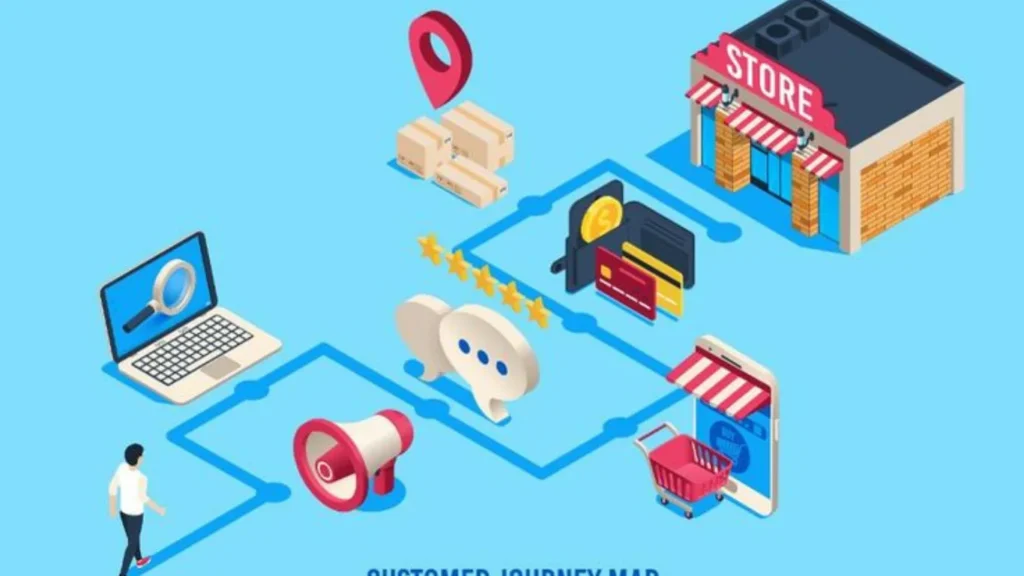
Customers rarely discover a business and make a purchase in one step. They might first see a social media post, search for a solution on Google, read a blog, compare different providers, check customer reviews, and finally contact a company through its website. After purchasing, their experience can influence whether they return, recommend the brand, or choose a competitor next time.
For digital marketers, understanding this journey is essential. A campaign may generate plenty of website traffic but few enquiries because customers are not receiving the right information at the right time. Similarly, a business might attract qualified leads but lose them because its follow-up process is confusing or too slow.
This is where customer journey mapping becomes valuable.
In 2027, customer journey mapping will need to account for more than traditional website visits and advertising clicks. AI-powered search, social media discovery, personalized experiences, email marketing, and changing customer expectations all influence how people interact with brands.
This guide explains what customer journey mapping is, why it matters, how to create a practical journey map, and how digital marketers can use customer insights to improve engagement, lead generation, and conversions.
What Is Customer Journey Mapping?
Customer journey mapping is the process of visually outlining the steps customers take when interacting with a business, from their first awareness of a problem to purchase and beyond.
A customer journey map identifies customer actions, questions, emotions, touch points, obstacles, and opportunities at each stage. It helps marketing teams understand what customers experience rather than focusing only on the activities the business performs.
For example, a potential customer looking for SEO services might discover an agency through an online search, read its service page, compare case studies, request a consultation, and receive a proposal. Each interaction influences the customer’s decision.
A journey map helps marketers answer questions such as:
- Where do customers first discover the business?
- What information do they need before making a decision?
- Which channels influence their choices?
- Where do potential customers lose interest?
- What prevents visitors from becoming leads?
- How can the business improve the post-purchase experience?
The goal is not to create a complicated diagram. It is to understand customer needs and use those insights to make marketing more relevant and effective.
Why Customer Journey Mapping Matters in 2027
Customer journeys are becoming more complex because people interact with businesses across multiple channels. A potential customer might discover a brand through a short video, research it using an AI-powered search tool, visit its website, and later respond to an email.
If each channel operates independently, customers may receive inconsistent messages or encounter unnecessary friction.
1. Customers use multiple discovery channels
Search engines remain important, but they are no longer the only places where people discover businesses. Social platforms, online communities, review websites, video content, and AI-powered search experiences can all influence customer decisions.
A journey map helps marketers understand how these touch points work together. Instead of measuring every channel in isolation, teams can examine how different interactions contribute to awareness, trust, and conversion.
2. Personalization requires a better understanding of customers
Customers are more likely to engage with messages that match their interests, needs, and current stage of decision-making.
Journey mapping helps businesses identify which information is useful at each stage. Someone who has just discovered a brand may need educational content, while someone comparing service providers may want pricing details, testimonials, or a consultation.
Personalization should always respect customer privacy and applicable data protection requirements. The aim is to make experiences more relevant, not intrusive.
3. Marketing performance depends on the complete experience
A successful marketing campaign does not end when someone clicks an advertisement. The landing page, form, follow-up email, sales conversation, and onboarding experience can all affect the final outcome.
Mapping the full journey helps marketers identify problems that campaign-level metrics may miss. This makes it easier to improve the experience from first interaction to long-term customer retention.
4. AI makes customer journeys harder to measure
AI-generated answers and conversational search experiences can introduce customers to brands without a traditional website click. Customers may also use AI tools to research options before visiting a company’s website directly.
This means marketers should combine available analytics data with customer feedback, CRM records, conversion tracking, and qualitative research. No single analytics tool captures every interaction perfectly.
The Five Main Stages of the Customer Journey
A customer journey can be divided into five common stages: awareness, consideration, decision, retention, and advocacy. The exact stages may differ depending on the business model, purchase complexity, and customer behavior.
1. Awareness: The customer discovers a problem or solution
At the awareness stage, people recognize a problem, need, or opportunity. They may not know which business can help them yet.
For example, a small business owner may notice that website traffic is declining and begin searching for ways to improve organic visibility.
Useful marketing touch points include:
- Informative blog posts
- Search engine results
- Social media content
- Educational videos
- Industry discussions
- AI-powered search answers
At this stage, focus on helpful information rather than aggressive selling. Content that explains a problem and introduces possible solutions can build early trust.
Relevant content ideas include beginner guides, checklists, short educational videos, and explanations of common mistakes.
2. Consideration: The customer evaluates possible solutions
Once customers understand their problem, they begin researching options. They may compare providers, explore different approaches, read reviews, and assess the likely cost.
For example, a business owner considering SEO services might compare agencies, review service descriptions, and look for evidence of previous results.
Marketers can support this stage with:
- Detailed service pages
- Case studies and project examples
- Comparison guides
- Frequently asked questions
- Webinars or consultations
- Customer testimonials
Make information easy to find. If customers cannot understand what your service includes or how your process works, they may move to another provider.
3. Decision: The customer is ready to take action
At the decision stage, customers have usually narrowed their options and need reassurance before committing.
They may want a price estimate, a product demonstration, a consultation, or clear information about delivery and support.
Your website should make the next step obvious. Use clear calls to action, simple forms, transparent service information, and accessible contact details.
For example, a service business could offer a consultation request form that asks only for information needed to begin the conversation.
Track form submissions, qualified leads, booked appointments, and completed purchases rather than treating every click as a conversion.
4. Retention: The customer continues the relationship
The journey does not end when a sale is completed. Customers may need on boarding instructions, product support, reminders, maintenance, or advice on getting more value from their purchase.
Useful retention activities include:
- Welcome and on boarding emails
- Helpful product or service guides
- Customer support resources
- Relevant follow-up communication
- Feedback requests
- Loyalty offers where appropriate
A positive post-purchase experience can encourage repeat business and reduce avoidable customer frustration.
5. Advocacy: Satisfied customers recommend the business
Advocacy occurs when customers voluntarily recommend a brand, share a positive experience, or leave a genuine review.
Businesses can encourage advocacy by providing good service, asking for honest feedback, and making it easy for customers to share their experiences.
Avoid pressuring customers to leave positive reviews or offering incentives that violate platform policies. Authentic feedback is more valuable than manufactured praise.
Customer recommendations can support trust during the awareness and consideration stages for future buyers.
How to Create a Customer Journey Map Step by Step
An effective customer journey map starts with customer evidence, not assumptions. Follow these steps to create a practical map that your marketing team can use.
Step 1: Define your objective
Start by deciding what you want to improve. A journey map created to increase online sales may look different from one designed to improve lead quality or customer retention.
Possible objectives include:
- Increasing landing-page conversions
- Reducing abandoned forms or carts
- Improving lead quality
- Shortening the sales cycle
- Improving customer on boarding
- Increasing repeat purchases
A clear objective helps you decide which stages, channels, and metrics deserve the most attention.
Step 2: Identify your target customer segments
Different customers can follow different journeys. A first-time buyer may need more education than an existing customer who already trusts your brand.
Create practical customer segments using relevant information such as needs, goals, industry, purchase behavior, or service requirements.
Use customer interviews, CRM data, sales conversations, surveys, and website analytics to understand these groups. Avoid relying entirely on assumptions about what customers want.
You do not need dozens of detailed personas. Start with the customer groups that matter most to your business.
Step 3: Collect customer and marketing data
Gather information from the systems your business already uses.
Useful sources include:
- Google Analytics or another website analytics platform
- Google Search Console
- CRM and sales records
- Email marketing reports
- Paid advertising dashboards
- Social media analytics
- Customer support conversations
- Reviews and customer surveys
Quantitative data shows what people do, while qualitative feedback can help explain why they do it.
For example, analytics might show that many visitors leave a service page without submitting a form. Customer interviews may reveal that visitors cannot find pricing information or do not understand the next step.
Handle customer information responsibly. Collect only what you need, apply appropriate access controls, and follow relevant privacy and consent requirements.
Step 4: List the key customer touch points
A touch point is any interaction a customer has with your business.
List touchpoints across the full journey, including search results, social media posts, blog articles, landing pages, advertisements, email messages, sales calls, customer support, and onboarding materials.
For each touchpoint, record its purpose and the question it should answer.
For example, a blog article may educate a customer, while a service page explains the offering and a consultation form helps turn interest into a lead.
This exercise can reveal gaps where customers have no clear path to the next stage.
Step 5: Record customer questions, emotions, and obstacles
A useful journey map goes beyond listing channels. It explores what customers are trying to achieve and what may stop them from moving forward.
At each stage, ask:
- What is the customer trying to accomplish?
- What information do they need?
- What concerns might they have?
- What could make the process difficult?
- What would help them feel confident?
For example, a customer comparing service providers may worry about hidden costs, unclear deliverables, or uncertain results.
Address those concerns with clear explanations, realistic expectations, transparent processes, and relevant proof of expertise.
Step 6: Map the journey visually
Organize your findings in a table, spreadsheet, whiteboard, or dedicated journey-mapping tool.
A basic customer journey map might look like this:
| Stage | Customer need | Touchpoints | Marketing opportunity | Key metric |
|---|---|---|---|---|
| Awareness | Understand a problem | Search, social content, blog | Publish helpful educational content | Relevant visits |
| Consideration | Compare solutions | Service pages, reviews, case studies | Explain value and demonstrate expertise | Engaged visits, enquiries |
| Decision | Choose a provider | Consultation, pricing, contact form | Simplify the conversion process | Qualified leads, sales |
| Retention | Get value from purchase | Email, support, onboarding | Improve customer guidance | Repeat purchases, retention |
| Advocacy | Share a positive experience | Reviews, referrals, community | Encourage honest feedback | Referrals, genuine reviews |
This map provides a starting point. Adapt it to your business rather than forcing every customer into the same path.
Step 7: Identify and prioritize friction points
Once the journey is mapped, look for places where customers struggle or drop off.
Common friction points include slow pages, confusing navigation, unclear pricing, lengthy forms, inconsistent messages, irrelevant follow-up emails, and delayed sales responses.
Prioritize issues based on customer impact, business value, effort, and available evidence.
If a high-intent landing page receives relevant traffic but produces few enquiries, improving its content and form may be more valuable than publishing several new blog posts.
Step 8: Test improvements and measure results
Turn your findings into specific actions with clear owners and deadlines.
For example, your team might rewrite a service page, simplify a form, improve follow-up emails, or create a comparison guide for customers in the consideration stage.
Measure the results against a baseline. Where possible, use controlled experiments or compare performance over appropriate periods while accounting for seasonality and other changes.
Customer journey mapping is an ongoing process. Update the map when customer behavior, products, channels, or business priorities change.
How AI and Automation Can Improve Customer Journey Mapping
AI tools can help marketers analyze customer feedback, group common questions, identify content gaps, and summarize patterns across large amounts of data. Automation can also support timely communication at important points in the journey.
For example, a CRM system may trigger a relevant follow-up after a customer requests a consultation. An email platform might send onboarding information after a purchase, while analytics tools can help identify pages where visitors frequently abandon the process.
However, automation should support customer needs rather than create unnecessary messages.
Before implementing AI or automated workflows:
- Review AI-generated findings for accuracy.
- Use appropriate data permissions and privacy safeguards.
- Keep communication relevant and easy to opt out of.
- Provide a clear route to human support when needed.
- Avoid assuming that correlation proves causation.
AI can make analysis faster, but customer context and human judgment remain essential.
The Role of SEO, Social Media, and Content Marketing
Customer journey mapping becomes more useful when it informs your channel strategy.
SEO and AI search visibility
Search content should match the questions customers ask at different stages. Educational articles can support awareness, comparison pages can help during consideration, and detailed service pages can support decision-making.
Clear headings, helpful answers, technical SEO, and relevant internal links make it easier for users to find related information. AEO and GEO can complement traditional SEO by encouraging content that is clear and well structured, but they do not replace a strong SEO foundation.
Social media marketing
Social platforms can introduce customers to a brand and help them evaluate its credibility. Educational videos, product demonstrations, customer stories, and useful answers to common questions can support discovery and engagement.
Use social media to build relationships, not simply to publish promotional graphics. Link interested users to relevant pages where they can learn more or take the next step.
Website design and conversion optimization
The website connects many customer touchpoints. If it is slow, confusing, or difficult to use on mobile, it can undermine otherwise effective marketing.
Review navigation, page clarity, forms, calls to action, accessibility, and mobile performance. Businesses planning a website improvement project can explore website design and web development services and replace the homepage URL with the appropriate service-page URL.
Email marketing and lead generation
Email can help customers continue their journey after an initial visit or enquiry. Send relevant information based on the action a person has taken and the communication they have agreed to receive.
For example, someone who downloads an educational guide may benefit from related resources, while a qualified lead may need service details or a consultation invitation.
A structured lead generation strategy can help connect these interactions with the business’s sales process. Link the anchor to the relevant service page before publishing.
Common Customer Journey Mapping Mistakes
Avoid these common problems when creating and using a journey map:
- Making assumptions without customer evidence. Validate your ideas using analytics, interviews, surveys, and sales feedback.
- Focusing only on the purchase. Include onboarding, retention, support, and advocacy.
- Treating every customer the same. Different segments may need different content and support.
- Ignoring offline interactions. Phone calls, meetings, events, and in-person experiences may influence the journey.
- Collecting data without taking action. Every important finding should lead to a decision, test, or follow-up question.
- Measuring vanity metrics alone. Traffic and impressions matter, but qualified leads, sales, retention, and customer satisfaction are closer to business outcomes.
- Creating a map and never updating it. Review it regularly as customer behavior and marketing channels change.
How to Measure the Success of Customer Journey Mapping
The right metrics depend on your objective and the stage you want to improve.
| Journey stage | Useful metrics |
|---|---|
| Awareness | Relevant organic traffic, reach, branded searches |
| Consideration | Engaged sessions, return visits, case study views |
| Decision | Qualified leads, conversion rate, sales cycle length |
| Retention | Repeat purchase rate, renewal rate, customer retention |
| Advocacy | Referral leads, customer reviews, recommendation activity |
Combine these metrics with customer feedback. A higher conversion rate is useful, but it is even more valuable when the resulting leads are a good fit for your business.
Use analytics and CRM data together where possible, while recognizing that attribution models may not capture every touchpoint. The goal is to understand how marketing contributes to outcomes, not to claim that one channel deserves all the credit.
Frequently Asked Questions
1. What is customer journey mapping in digital marketing?
Customer journey mapping is the process of documenting how customers discover, evaluate, purchase from, and interact with a business over time. It identifies important touchpoints, customer needs, questions, and obstacles. Digital marketers use these insights to improve content, advertising, website experiences, follow-up communication, and customer retention.
2. Why is customer journey mapping important in 2027?
Customer journey mapping helps businesses understand interactions across search engines, AI-powered discovery tools, social media, websites, email, and sales channels. As customer journeys become more connected and harder to measure in one place, mapping helps teams identify gaps, improve relevance, and focus marketing efforts on meaningful business outcomes.
3. What are the five stages of a customer journey?
Five common stages are awareness, consideration, decision, retention, and advocacy. Awareness is when customers discover a need or solution. Consideration involves evaluating options, while decision is when they choose a provider. Retention focuses on delivering ongoing value, and advocacy occurs when satisfied customers recommend the business.
4. Which tools can marketers use for customer journey mapping?
Marketers can start with spreadsheets, whiteboards, or diagramming tools to visualize the journey. Website analytics, Search Console, CRM platforms, email marketing systems, advertising dashboards, customer surveys, and support records provide evidence about customer behavior. Choose tools based on your team’s needs and the data you can responsibly collect.
5. How often should a customer journey map be updated?
Review your customer journey map regularly, such as quarterly, and whenever there is a major change to your services, website, marketing channels, or sales process. Use new customer feedback and performance data to identify changes in behavior. A journey map should be a working resource rather than a one-time document.
6. How does customer journey mapping improve conversions?
It helps marketers find obstacles that prevent customers from taking the next step. These may include unclear service information, slow pages, complicated forms, or irrelevant follow-up messages. By fixing the most important friction points and measuring results, businesses can make it easier for suitable customers to move from interest to enquiry or purchase.
Conclusion
Customer journey mapping in 2027 is about understanding the complete customer experience, not simply tracking clicks or counting conversions. Customers may discover a business through search, social media, AI-powered tools, recommendations, or offline interactions before eventually deciding to buy. Each touchpoint can influence their trust and willingness to take the next step.
For digital marketers, the best starting point is to identify customer segments, collect reliable feedback and analytics, map the major stages, and find the obstacles that matter most. Then connect those findings to practical improvements in SEO, content marketing, website design, email communication, and lead generation.
AI and automation can help teams analyze information and deliver more relevant experiences, but they should support human judgment and responsible use of customer data. Success should be measured through qualified leads, sales, retention, and customer satisfaction rather than traffic alone.
ASINFOVISION, a digital marketing company, helps businesses plan and execute integrated digital strategies across channels. By keeping customer needs at the center of every decision, marketers can create more useful experiences, strengthen relationships, and build a more effective growth strategy for 2027 and beyond.