
0 views
Digital marketing is becoming more focused on understanding customers, delivering relevant experiences, and building trust. Businesses can no longer rely only on broad audience assumptions to create effective campaigns. They need reliable customer information that helps them understand what people want and how they prefer to interact with a brand.
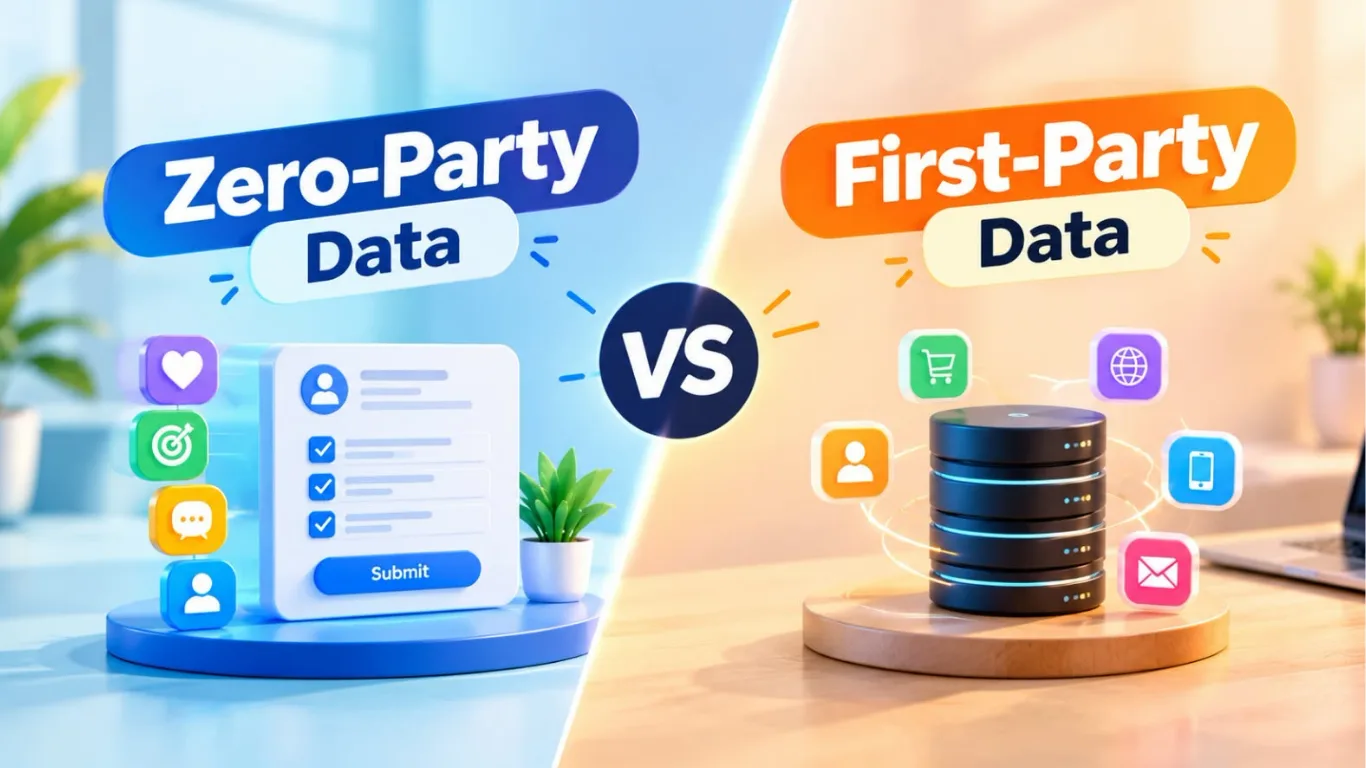
Two important types of customer information are zero-party data and first-party data. Although both come directly from customer relationships, they offer different insights. Zero-party data tells you what customers choose to share, while first-party data helps you understand their actions and interactions.
For businesses planning their marketing strategy for 2027, understanding the difference can improve personalization, email marketing, audience segmentation, lead generation, and campaign measurement. The goal is not to collect as much information as possible. It is to collect useful information responsibly and use it to create better customer experiences.
What Is Zero-Party Data?
Zero-party data is information that customers intentionally and proactively share with a business. It may include their preferences, interests, goals, product requirements, communication choices, or purchase intentions.
For example, a customer might complete a quiz to find the right skincare product or select the types of emails they want to receive. Because the customer provides this information directly, the business gets a clearer picture of their stated needs instead of having to guess.
Examples of Zero-Party Data
Businesses can collect zero-party data through several simple methods:
- Preference centers: Customers choose which topics or offers interest them.
- Customer surveys: Buyers share feedback about products, services, and experiences.
- Interactive quizzes: Visitors answer questions to receive tailored recommendations.
- Product finders: Shoppers describe their needs, budget, or intended use.
- Sign-up forms: Subscribers select the content they want to receive.
- Customer interviews: Prospects explain their challenges, priorities, and buying goals.
- Post-purchase questions: Customers describe why they made a purchase and what they expect next.
For example, a digital marketing agency could ask a potential client which service they need most: SEO, social media marketing, paid advertising, or website development. That answer is zero-party data because the prospect has directly stated their interest.
Why Zero-Party Data Matters
Zero-party data can make marketing more relevant because it provides direct information about customer preferences and intentions. Instead of assuming every subscriber wants the same offer, a business can tailor its messages to the interests people have actually selected.
However, customers must have a good reason to share information. Keep questions relevant, explain how responses will be used, and avoid requesting unnecessary personal details. Voluntary sharing is most useful when the experience provides clear value in return.
What Is First-Party Data?
First-party data is information a business collects directly through its own channels and interactions with customers or website visitors. It includes behavioral, transactional, and engagement information generated when people interact with a website, application, email campaign, store, or customer service team.
For example, if someone visits a service page, downloads a guide, purchases a product, or clicks a link in a marketing email, those interactions can generate first-party data.
This information helps businesses understand what customers do, which content attracts attention, and where people may encounter difficulties in the customer journey.
Examples of First-Party Data
Common examples include:
- Website behavior: Pages visited, content viewed, and actions taken.
- Purchase history: Products purchased, order frequency, and transaction value.
- Email engagement: Clicks, unsubscribes, and other available engagement signals.
- CRM records: Customer interactions and relevant sales information.
- Lead form submissions: Details people provide when requesting a quote or consultation.
- App usage: Features used and actions taken within an application.
- Customer support interactions: Questions, service requests, and recurring problems.
- Loyalty activity: Membership participation and eligible purchase activity.
Suppose a visitor repeatedly explores your SEO service page and reads a blog about keyword research. Those actions may suggest an interest in improving search visibility. However, they do not prove the visitor is ready to purchase SEO services.
That distinction matters: first-party behavioral data provides useful signals, but marketers should avoid treating every signal as a confirmed customer intention.
Zero-Party Data vs First-Party Data: Key Differences
The main difference is how the information is obtained and what it tells a business. Zero-party data is deliberately shared by the customer, while first-party data is collected through direct interactions and can include observed behavior.
| Comparison | Zero-party data | First-party data |
|---|---|---|
| How it is collected | Customers intentionally share information | Businesses record direct customer interactions |
| What it reveals | Stated interests, preferences, and intentions | Actions, engagement, and transaction patterns |
| Common sources | Surveys, quizzes, preference centers | Websites, CRM systems, purchases, email activity |
| Main benefit | Helps understand what customers say they want | Helps understand how customers behave |
| Main limitation | Customers may not answer or may change preferences | Behavior can be misinterpreted |
| Marketing use | Personalized offers and content preferences | Segmentation, journey analysis, and campaign optimization |
The two types of data are not competitors. They answer different questions, and combining them can give businesses a more useful understanding of their audiences.
For example, a visitor might browse several pricing pages, generating first-party behavioral data. They might then complete a form explaining that their main goal is to generate qualified leads within a limited budget. That response adds zero-party context to the earlier behavior.
Together, these insights can help a sales team prepare a more relevant conversation.
Why These Data Types Matter for Marketing in 2027
A strong customer data strategy can support more relevant communication, better measurement, and more responsible personalization. As businesses plan for 2027, zero-party and first-party data are useful foundations for marketing that depends less on assumptions and more on direct customer relationships.
They do not eliminate every challenge associated with privacy, measurement, or advertising platforms. Businesses still need to consider applicable laws, platform rules, consent requirements, and the limitations of their data.
1. Customers Expect More Relevant Experiences
Customers may receive emails, advertisements, and promotional messages from many businesses every day. Generic campaigns can struggle to stand out when they do not address a person’s needs or interests.
Zero-party data helps marketers understand what customers want to hear about. First-party data helps them understand which pages, products, or messages people engage with.
Used together, these insights can help businesses create more relevant experiences without relying entirely on broad audience assumptions.
2. Privacy and Transparency Need Attention
Customer information should be collected and used responsibly. Businesses should explain what they collect, why they collect it, and how it supports the customer experience.
First-party data is not automatically exempt from privacy obligations simply because it comes from a company’s own website or systems. Likewise, voluntary sharing does not mean information can be used for any purpose without considering the original context, applicable law, or customer expectations.
A clear privacy notice, appropriate consent practices, secure data storage, and sensible access controls should be part of the strategy from the beginning.
3. Personalization Can Become More Useful
Personalization works best when it helps customers find relevant information or make decisions more easily. A preference selected by a customer can help a business recommend suitable content, while behavioral data can indicate which parts of the experience need improvement.
For example, a software company could use stated preferences to send information about a particular product category. It could then use first-party engagement data to understand which educational resources are most useful to subscribers.
The aim is to make communication more helpful, not to personalize every interaction simply because data is available.
4. Campaign Measurement Becomes More Connected
First-party data can help marketers track meaningful actions across their own channels, such as form submissions, purchases, and returning visits. Zero-party data can add context about the reasons behind those actions.
When these insights are connected carefully, businesses can make better decisions about content, lead nurturing, and customer retention. They should still account for measurement gaps, consent choices, and the fact that a customer journey may involve channels the business cannot fully observe.
Benefits of Zero-Party Data for Businesses
Zero-party data can be especially valuable when a business needs to understand customer needs directly.
Better Audience Segmentation
Customer preferences can help marketers group people by stated interests, goals, or communication choices. A training company, for instance, could ask subscribers whether they are beginners, experienced professionals, or business owners looking to train their teams.
Each group can then receive more relevant educational material, provided the information remains accurate and useful.
More Relevant Email Marketing
Email subscribers may have different interests even when they sign up through the same form. A preference center can let them choose topics, message frequency, or content categories.
This can help businesses send fewer irrelevant messages and build a better subscriber experience. Businesses should also respect unsubscribe requests and applicable email marketing rules.
Clearer Product Recommendations
A product quiz can ask customers about budget, intended use, style, or other relevant needs. The answers can guide recommendations without requiring the business to infer every preference from browsing behavior.
The quiz should be short, easy to understand, and genuinely helpful. Asking too many questions before providing value can discourage participation.
Stronger Customer Relationships
When a business asks for feedback and responds to it, customers can see that their opinions matter. This does not guarantee loyalty, but it creates an opportunity to improve service and demonstrate that feedback is taken seriously.
Benefits of First-Party Data for Businesses
First-party data helps businesses understand the real interactions taking place across their own marketing and customer service channels.
Understand Website Performance
Website analytics can show which pages attract visitors, which content receives engagement, and where users leave a process. Marketers can use these signals to identify opportunities to improve navigation, page content, and calls to action.
Businesses investing in organic visibility can also explore ASINFOVISION’s SEO services to support their broader search strategy.
Improve Lead Generation
First-party data from contact forms, consultation requests, and CRM records can help sales and marketing teams understand how prospects move through the buying journey.
For instance, a visitor who requests a consultation has taken a clearer action than someone who only reads a blog post. Even then, teams should qualify leads based on relevant business needs rather than assuming every inquiry is ready to buy.
Improve Customer Retention
Purchase history and customer engagement can help a business identify repeat buyers, inactive customers, and common points of friction. A company might send a useful product guide after a purchase or follow up when a customer has requested support.
These actions should be timely and appropriate. Repeated messages based on weak behavioral signals can feel intrusive rather than helpful.
Measure Content and Campaign Engagement
Email clicks, landing page interactions, and completed forms can help marketers evaluate whether their content is supporting business goals. Businesses can use these signals to test different messages and improve campaign performance over time.
For better results, connect activity metrics with outcomes such as qualified leads, purchases, retention, or revenue where reliable measurement is available.
How to Combine Zero-Party and First-Party Data
The most practical approach is to use both data types together, with a clear purpose for each. You do not need a complicated technology setup to begin.
Step 1: Define the Business Goal
Start with a specific question. Do you want to improve lead quality, increase repeat purchases, make email campaigns more relevant, or reduce friction in the customer journey?
A clear goal helps you decide which information is useful and which questions are unnecessary.
Step 2: Review the Data You Already Have
Identify the information collected through your website, CRM, email platform, sales process, and customer service channels. Check where it is stored, who can access it, and whether the data is accurate enough to support decisions.
Avoid collecting additional information before understanding what you already have.
Step 3: Ask Customers Simple, Relevant Questions
Use a short survey, preference center, or optional form to gather information that cannot be reliably inferred from behavior.
For example, a service business might ask:
- What is your main business goal?
- Which service are you most interested in?
- What is your preferred way to receive updates?
Only ask questions that have a clear use. Explain how the answers will improve the customer’s experience.
Step 4: Connect Responses With Relevant Interactions
Where appropriate and permitted, connect a customer’s stated preferences with their interactions across your own channels.
For example, a prospect may state that they want help with lead generation and later read several articles about landing page optimization. The stated goal and observed content engagement can help a marketing team choose a relevant follow-up resource.
Use suitable access controls and avoid combining records in ways that violate customer expectations or applicable requirements.
Step 5: Create Useful Audience Segments
Build segments around meaningful needs and actions rather than creating a separate segment for every small difference.
A business might create groups such as:
- New subscribers interested in educational content
- Prospects researching a particular service
- Existing customers who may need additional support
- Customers who have selected a specific communication preference
Make sure each segment has a clear purpose and a relevant next step.
Step 6: Test and Improve
Start with a small campaign and evaluate the results. Compare relevant outcomes, such as qualified inquiries, conversions, engagement, or customer feedback.
Use the findings to improve your questions, messaging, and segmentation. Do not assume that a campaign worked simply because it generated more clicks.
Practical Examples Across Different Industries
E-Commerce Businesses
An online store can use purchase history and product views as first-party data. A short style quiz or preference center can collect zero-party data about favorite categories, preferred fits, or shopping interests.
The business can use both to make product discovery easier and send more relevant updates.
B2B Companies
A B2B company may track which service pages a prospect visits and which guides they download. Those interactions provide first-party signals.
A lead form asking about business challenges, project priorities, or expected timelines collects zero-party information. Together, these details can help the sales team prepare a more useful consultation.
Education and Training Providers
A training provider can observe which course pages people visit and which emails they engage with. It can also ask prospective learners about their experience level, career goals, and preferred learning format.
This information can guide course recommendations and follow-up content without assuming that every visitor has the same needs.
Service-Based Businesses
A digital marketing agency can track which service pages visitors explore and which inquiry forms they complete. It can then ask prospects about their main marketing challenge and business goals.
These insights can support more relevant lead nurturing. For businesses seeking to strengthen their wider online presence, website design and development can also play a role by making information easier to find and inquiries easier to complete.
Common Mistakes to Avoid
Collecting customer data is only useful when businesses handle it carefully and apply it to a real purpose.
Collecting too much information: Long forms and unnecessary questions create friction. Request only what you need.
Treating behavior as certainty: A page visit does not prove purchase intent. Use behavioral signals as clues, not unquestionable facts.
Ignoring customer preferences: If someone selects a communication preference, make a reasonable effort to respect it.
Keeping inaccurate records: Outdated details and conflicting records can lead to irrelevant campaigns. Review and update data regularly.
Using data without clear transparency: Customers should understand the purpose of data collection and how their information may be used.
Measuring vanity metrics alone: Opens, clicks, and page views can be useful, but they should be considered alongside business outcomes and the quality of customer experience.
Failing to secure information: Limit access to customer data, use appropriate security measures, and establish clear retention and deletion practices.
How to Prepare Your Data Strategy for 2027
Businesses do not need to wait until 2027 to improve their approach. A few practical steps can create a stronger foundation.
- Audit your current data. List the sources you use and identify gaps, duplication, and outdated records.
- Choose one useful question. Ask customers something that could improve a real marketing or service decision.
- Improve your website experience. Make forms, preference settings, privacy information, and key calls to action easy to find.
- Connect marketing and sales insights. Agree on what qualifies as a useful lead and how customer information should be handled.
- Review consent and privacy practices. Check relevant laws, platform requirements, and your own privacy notices with appropriate expertise.
- Measure meaningful outcomes. Track whether the strategy improves lead quality, conversions, retention, or customer satisfaction.
- Review the process regularly. Customer needs and preferences change, so make it easy for people to update their information.
AI tools may help summarize feedback, identify patterns, or support segmentation, but they should complement human judgment. Teams should check the quality of the data, limit access to personal information, and avoid using automated predictions as unquestionable facts.
A well-designed data strategy is not about collecting everything. It is about turning relevant, responsibly collected information into better decisions.
Frequently Asked Questions
1. What is the main difference between zero-party and first-party data?
Zero-party data is information customers intentionally share, such as their preferences or goals. First-party data is collected through direct interactions, such as website activity, purchases, and email engagement. One tells you what customers say they want; the other helps you understand how they behave.
2. Which is better for digital marketing in 2027?
Neither is universally better. Zero-party data helps clarify customer preferences, while first-party data provides insight into actual interactions. Combining both can help businesses personalize experiences and make more informed marketing decisions.
3. Is zero-party data more accurate than first-party data?
Zero-party data can be more direct when understanding a person’s stated preferences, but answers may be incomplete or change over time. First-party behavioral data can accurately record an action, but the meaning of that action may be uncertain. Accuracy depends on the question, collection method, and context.
4. How can a small business collect zero-party data?
A small business can begin with a short survey, a simple preference center, a product quiz, or a question on an inquiry form. Explain why you are asking and how the answer will be used. Keep the process short and avoid requesting unnecessary information.
5. Does first-party data require customer consent?
The requirements depend on the type of information, how it is collected, the intended use, and the applicable laws and platform rules. Collecting data directly does not automatically remove privacy obligations. Businesses should provide appropriate transparency and obtain consent where required.
6. Can AI help businesses use customer data?
Yes. AI can help analyze feedback, summarize trends, support segmentation, and identify patterns in marketing performance. Its output depends on data quality and context, so businesses should validate results, protect personal information, and keep human oversight in place.
Conclusion
Zero-party data and first-party data can help businesses build a more relevant and responsible marketing strategy for 2027. Zero-party data offers direct insight into customer preferences and intentions, while first-party data helps reveal how people interact with a brand across its own channels. Neither provides a complete picture on its own, but together they can reduce guesswork and support better decisions.
Start by reviewing the data you already collect, identifying what you genuinely need to know, and asking customers only useful, transparent questions. Then connect those insights to relevant content, website improvements, email campaigns, and lead generation activities. Measure results using meaningful business outcomes rather than relying only on engagement numbers.
As a digital marketing company, ASINFOVISION can help businesses connect their website, SEO, content, and performance marketing efforts into a more integrated strategy. The strongest approach for 2027 will be one that balances useful personalization with customer trust, data quality, and responsible use of information.