
1 view
A customer may discover your business through Google, watch one of your videos on Instagram, visit your website later, receive an email, and finally contact your sales team. The problem starts when every interaction feels like it belongs to a different company.
That is where omnichannel marketing makes a difference.
Customers do not think in terms of your marketing channels. They simply expect every interaction with your brand to feel connected. They want relevant information, consistent messaging, and a smooth transition from one touchpoint to another.
An effective omnichannel marketing strategy brings your website, search, social media, email, advertising, customer service, and other channels together around the customer rather than managing each channel separately.
This approach is becoming increasingly important as customer journeys become less linear. Someone may start with a search query, compare brands on social media, return through a paid advertisement, and convert several days later.
So, how can businesses create a consistent customer journey across all these touchpoints?
Let’s explore what omnichannel marketing means, why it matters, the channels involved, common mistakes to avoid, and how to build a practical strategy.
What Is Omnichannel Marketing?
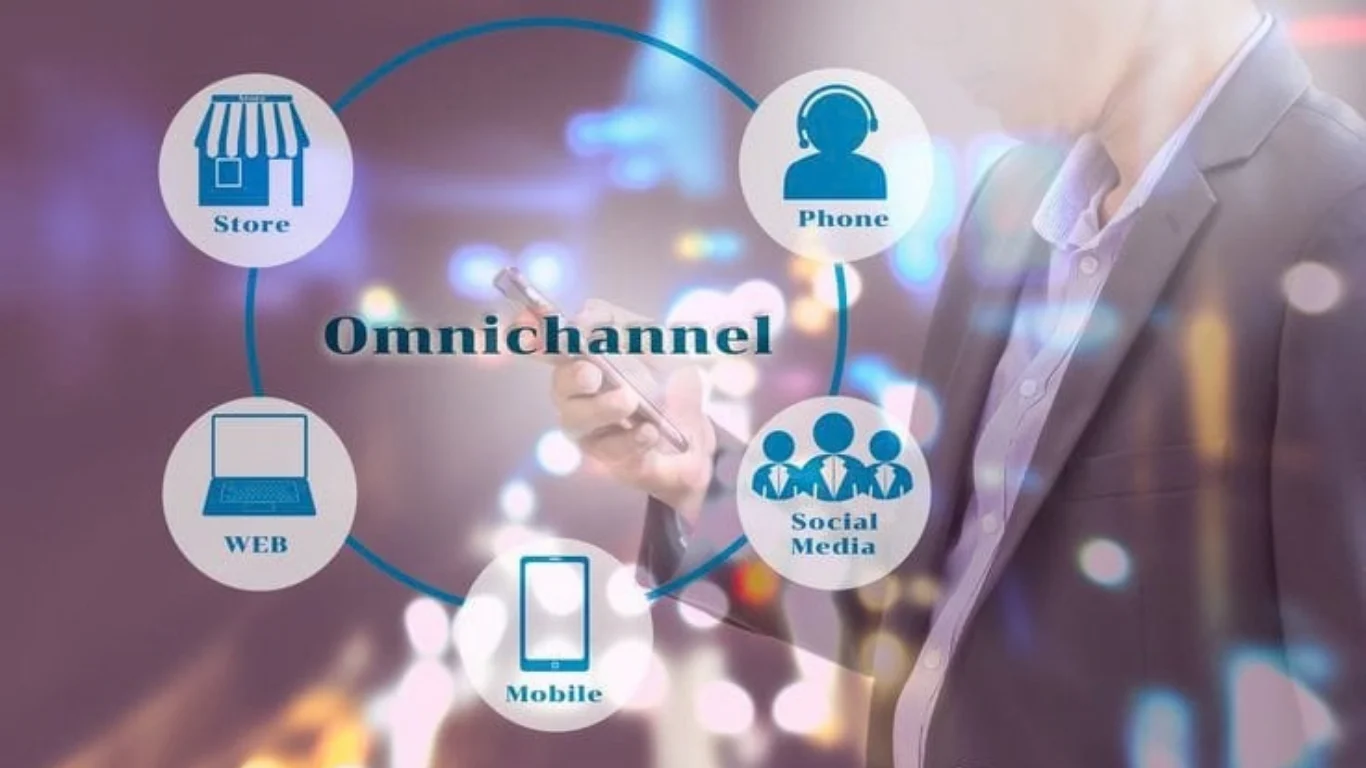
Omnichannel marketing is a strategy that connects multiple marketing and communication channels to create a consistent and seamless customer experience.
Instead of treating SEO, social media, email, paid advertising, websites, and customer support as separate activities, an omnichannel approach connects them around the same customer journey.
For example, imagine someone searches for a service on Google.
They find your website and read an educational blog post. A few days later, they see your brand on social media. They then receive a relevant email after submitting an enquiry and eventually speak with a sales representative.
With omnichannel marketing, these interactions should feel connected.
The customer should not have to repeatedly explain who they are, what they need, or where they are in the buying process.
Omnichannel vs. Multichannel Marketing
The terms multichannel and omnichannel are often used interchangeably, but there is an important difference.
Multichannel marketing means a business uses multiple channels.
Omnichannel marketing means those channels work together.
A company might have a website, Instagram account, email newsletter, Google Ads campaign, and CRM system but still operate them independently. That is multichannel marketing.
An omnichannel approach connects these touchpoints so that information, messaging, targeting, and customer experiences are more consistent.
The goal is not simply to be present everywhere.
The goal is to make every relevant interaction work together.
Why Is Omnichannel Marketing Important for Businesses?
Customer journeys have become more complicated.
People rarely discover a business, make a decision, and convert through a single interaction. They research, compare, revisit websites, check reviews, consume content, ask questions, and interact with brands across different platforms.
This creates a challenge for businesses.
If every channel operates independently, customers may encounter:
- Different offers
- Inconsistent brand messaging
- Repeated advertisements
- Conflicting information
- Poorly timed emails
- Disconnected customer service
- Difficult transitions between channels
An omnichannel strategy helps reduce these gaps.
It can also help businesses create a more relevant experience by using information about customer interests, behaviour, and previous interactions.
The Customer Journey Behind Omnichannel Marketing
Before connecting your channels, you need to understand how customers actually move through your business.
A typical journey may include five stages:
1. Awareness
The customer becomes aware of a problem, need, product, or service.
They may discover your brand through:
- Google search
- Social media
- YouTube
- Online advertisements
- Recommendations
- Industry content
At this stage, educational content and brand visibility are usually more useful than aggressive sales messages.
2. Consideration
The customer begins comparing options.
They may visit your website, read blog posts, check reviews, compare prices, or follow your social media accounts.
This is where useful content, case studies, service pages, and social proof can help build confidence.
3. Conversion
The customer is ready to take action.
Depending on your business, that action could be:
- Making a purchase
- Booking a consultation
- Requesting a quote
- Filling out a lead form
- Calling your business
- Signing up for a service
Your website and landing pages should make this step simple.
Businesses looking to improve this part of the journey can consider lead generation services as part of a broader conversion strategy.
4. Retention
The relationship does not end after the first conversion.
Email marketing, customer support, useful resources, loyalty campaigns, and personalised communication can encourage customers to stay engaged.
5. Advocacy
Satisfied customers can become an important source of growth.
Reviews, referrals, testimonials, user-generated content, and social recommendations can introduce your business to new audiences.
An effective omnichannel strategy considers all five stages instead of focusing only on acquisition.
Key Channels in an Omnichannel Marketing Strategy
There is no universal list of channels that every business needs.
The right combination depends on your audience, industry, products, buying cycle, and resources.
However, several channels commonly play important roles.
Website
Your website often acts as the central destination for your marketing efforts.
Customers may arrive from search engines, social media, advertisements, email, or direct traffic.
That makes website experience critical.
Your website should have:
- Clear messaging
- Simple navigation
- Mobile-friendly design
- Fast-loading pages
- Strong service or product pages
- Clear calls to action
- Trust signals
- Easy-to-use forms
- Consistent branding
A strong website designing and development service can help connect marketing activity with the conversion experience.
Your website should not simply look good. It should help visitors understand what you offer and what they should do next.
SEO
Search engine optimisation helps customers discover your business when they are actively looking for information, products, or services.
However, SEO should not operate separately from the rest of your marketing.
Your SEO strategy should connect with:
- Content marketing
- Website structure
- Conversion optimisation
- Brand building
- Local visibility
- Customer questions
Businesses investing in professional SEO services should consider how organic search fits into the wider customer journey.
For example, a blog post might introduce a customer to your brand, while a service page supports the final conversion.
Social Media
Social media can support several stages of the customer journey.
It can create awareness, demonstrate expertise, answer questions, provide social proof, and encourage website visits.
Instead of treating social media as a place to publish promotional posts, businesses should think about its role in the broader journey:
Discovery → Engagement → Trust → Conversion
Educational posts, short-form videos, customer stories, behind-the-scenes content, and useful tips can all contribute to this process.
A coordinated social media marketing strategy can ensure that social content supports the same positioning and messaging used on your website and other channels.
Email Marketing
Email becomes particularly powerful when it is connected to customer behaviour.
Instead of sending the same message to everyone, businesses can create different communications based on where customers are in their journey.
For example:
- New subscribers can receive educational content.
- Prospects can receive relevant case studies.
- Customers can receive onboarding information.
- Existing customers can receive product recommendations.
- Inactive customers can receive re-engagement campaigns.
The objective is relevance rather than simply increasing email frequency.
Paid Advertising
Paid search and social advertising can introduce customers to your business or bring existing prospects back to your website.
For example, someone who visits a service page without converting could later see a relevant advertisement.
But paid campaigns should connect with the landing page experience.
If the advertisement promises one thing and the landing page communicates something completely different, the customer journey becomes confusing.
Businesses can integrate Google Ads management with SEO, landing pages, analytics, and lead generation rather than treating paid advertising as an isolated activity.
How to Create a Consistent Customer Journey
Creating an omnichannel strategy does not mean connecting every available platform.
Start with the customer.
1. Map the Customer Journey
First, identify how customers currently discover, evaluate, purchase, and interact with your business.
Ask:
- Where do customers first discover us?
- What information do they need before buying?
- Which pages do they visit?
- What questions do they ask?
- Where do they leave the journey?
- What happens after conversion?
- Which channels influence the final decision?
Customer journey mapping can reveal gaps that are difficult to see when each channel is managed independently.
2. Define Consistent Brand Messaging
Customers should recognise your business regardless of where they encounter it.
Your website, advertisements, emails, social posts, and sales materials should communicate a consistent:
- Brand positioning
- Tone of voice
- Value proposition
- Visual identity
- Product or service information
Consistency does not mean copying the exact same message everywhere.
Each platform has a different purpose.
Instead, the central brand message should remain consistent while the format changes according to the channel.
3. Connect Your Data
An omnichannel strategy becomes difficult when customer information is scattered across different systems.
Businesses should identify what information needs to move between platforms.
This might include:
- Contact information
- Purchase history
- Website interactions
- Email engagement
- Lead status
- Customer preferences
- Previous enquiries
CRM systems and marketing automation can help create a more complete picture of the customer.
The goal is not to collect data simply because it is available. The goal is to use relevant information to improve the customer experience.
4. Personalise the Experience
Customers are more likely to engage with messages that reflect their interests and needs.
Personalisation can be simple.
For example, an e-commerce business could recommend products based on previous purchases. A B2B company could send content related to a prospect’s industry or previous enquiry.
First-party data can play an important role here because it helps businesses understand their own customers and create more relevant experiences.
5. Make Channel Transitions Easy
One of the simplest ways to improve an omnichannel customer journey is to remove unnecessary friction.
For example:
A social media post → relevant website page → enquiry form → confirmation email → sales follow-up.
Each step should naturally lead to the next.
Avoid sending someone from a social media post to a generic homepage when they could be taken directly to the relevant service or product page.
6. Align Marketing and Sales
Marketing may generate a lead, but the customer experience continues when sales gets involved.
If marketing tells a customer one thing and the sales team says something completely different, trust can quickly disappear.
Marketing and sales teams should agree on:
- Target audiences
- Lead definitions
- Key messaging
- Offers
- Customer stages
- Follow-up processes
- Conversion goals
This creates a more connected experience from first interaction to final purchase.
Use Content to Connect Different Channels
Content can act as the bridge between different parts of an omnichannel strategy.
A single research topic can become multiple pieces of content.
For example, a business could create:
One detailed blog post
↓
Three social media posts
↓
A short video
↓
An email newsletter
↓
A downloadable guide
↓
A sales resource
The message remains connected, but the format changes according to the customer’s preferred channel.
This approach can also make content production more efficient.
Personalisation Without Making Marketing Feel Intrusive
Personalisation can improve relevance, but there is a fine line between helpful and excessive.
A customer should feel understood, not watched.
Instead of using every available piece of customer information, focus on information that genuinely improves the interaction.
For example, showing relevant product recommendations can be useful.
Sending repeated advertisements for something a customer has already purchased can be frustrating.
Good omnichannel marketing asks:
“What information would make this interaction more useful for the customer?”
That question should guide personalisation decisions.
Common Omnichannel Marketing Mistakes
Even businesses with multiple active marketing channels can struggle with consistency.
Here are some common mistakes.
Treating Every Channel Separately
When teams work in silos, customers experience disconnected messaging and duplicated communication.
Using the Same Content Everywhere
Consistency does not mean posting identical content across every platform.
Adapt the format while maintaining the same core message.
Ignoring the Website
Social media and advertising can generate attention, but the website often plays an important role in turning that attention into enquiries and customers.
Focusing on Vanity Metrics
Likes, impressions, followers, and website traffic can be useful indicators, but they do not necessarily represent business growth.
Track the metrics that matter to your objectives.
Sending Too Many Messages
More communication does not automatically create better engagement.
Timing and relevance matter.
Forgetting the Post-Purchase Experience
An omnichannel strategy should not end when someone buys.
Customer onboarding, support, follow-up emails, reviews, referrals, and retention campaigns are part of the customer journey too.
How to Measure Omnichannel Marketing Performance
Measuring an omnichannel strategy can be more complicated than measuring individual campaigns.
You need to understand how channels contribute to the overall customer journey.
Useful metrics can include:
- Website conversion rate
- Lead volume
- Qualified leads
- Customer acquisition cost
- Email engagement
- Paid advertising performance
- Organic traffic quality
- Social engagement
- Repeat purchases
- Customer retention
- Revenue by channel
- Assisted conversions
One important principle is:
Traffic ≠ Leads ≠ Customers
A campaign generating thousands of visitors may be less valuable than one generating a smaller number of qualified prospects.
A Simple Omnichannel Marketing Framework
Businesses do not need a complicated system to get started.
Use this five-step framework:
Discover
Identify where your customers spend time and how they find businesses like yours.
Connect
Make sure your website, social media, advertising, email, and sales processes communicate consistent information.
Personalise
Use relevant customer data to make interactions more useful.
Convert
Remove unnecessary friction from forms, checkout processes, bookings, and enquiries.
Retain
Continue communicating with customers after conversion and give them reasons to return.
This framework can be adapted for both B2B and B2C businesses.
Omnichannel Marketing: Key Takeaways
| Strategy | Why It Matters |
|---|---|
| Customer journey mapping | Reveals gaps between touchpoints |
| Consistent messaging | Builds recognition and trust |
| Connected data | Creates a clearer customer picture |
| Personalisation | Makes communication more relevant |
| Strong website | Supports conversion across channels |
| SEO | Captures customers actively searching |
| Social media | Supports discovery and engagement |
| Email marketing | Builds ongoing relationships |
| Paid advertising | Supports targeted acquisition |
| Analytics | Shows which activities contribute to business results |
Frequently Asked Questions
What is omnichannel marketing?
Omnichannel marketing connects multiple customer-facing channels to create a consistent and seamless experience. Instead of managing SEO, social media, email, advertising, websites, and sales separately, businesses connect these touchpoints around the customer journey. The objective is to make it easier for customers to move from discovery to consideration, conversion, and retention.
What is the difference between omnichannel and multichannel marketing?
Multichannel marketing means using several marketing channels, such as social media, email, search, and paid advertising. Omnichannel marketing goes a step further by connecting those channels. The customer experience, messaging, data, and journey are designed to work together rather than operating independently.
Why is an omnichannel customer journey important?
Customers often interact with a business through several touchpoints before making a decision. An omnichannel journey helps ensure those interactions feel consistent. It can reduce friction, improve relevance, strengthen brand trust, and make it easier for customers to move between discovery, research, conversion, and post-purchase interactions.
Which channels should a business include in an omnichannel strategy?
There is no single combination that works for every business. Common channels include websites, SEO, social media, email marketing, paid advertising, content marketing, sales, and customer support. Businesses should prioritise channels their target customers actually use and then connect those channels around clear customer journey stages.
How can small businesses start with omnichannel marketing?
Small businesses can start by mapping their customer journey and identifying their most important touchpoints. Then they can align website messaging, social media, email, SEO, and lead follow-up. There is no need to connect every platform immediately. Start with the channels that have the strongest influence on discovery, conversion, and retention.
How do you measure an omnichannel marketing strategy?
Measure both channel-level and business-level performance. Useful metrics include qualified leads, conversion rates, customer acquisition cost, revenue, repeat purchases, organic traffic quality, paid advertising performance, and email engagement. The key is to look beyond individual channel metrics and understand how different touchpoints contribute to the complete customer journey.
Conclusion
Omnichannel marketing is not about being present on every platform.
It is about making the platforms you already use work better together.
A customer might discover your business through search, learn from your content, engage with you on social media, visit your website, receive an email, and eventually become a customer. Every one of those interactions contributes to their overall perception of your brand.
The businesses that create better experiences will be the ones that think beyond individual campaigns and focus on the complete customer journey.
Start by mapping your customer’s path. Then connect your messaging, website, content, advertising, social media, email, sales, and customer support around that journey. Use data to understand what customers need, but keep the experience useful and human.
For businesses that want to strengthen different parts of this ecosystem, SEO services, website designing and development, social media marketing service ,Google Ads management, and lead generation can work together as parts of a broader digital strategy.
ASINFOVISION can help businesses build integrated digital marketing strategies where different channels support the same business goals—visibility, trust, qualified leads, and sustainable growth.
The strongest omnichannel strategy is ultimately simple: make every customer interaction feel like part of the same conversation.